Optimize Raman performance for your sample and application
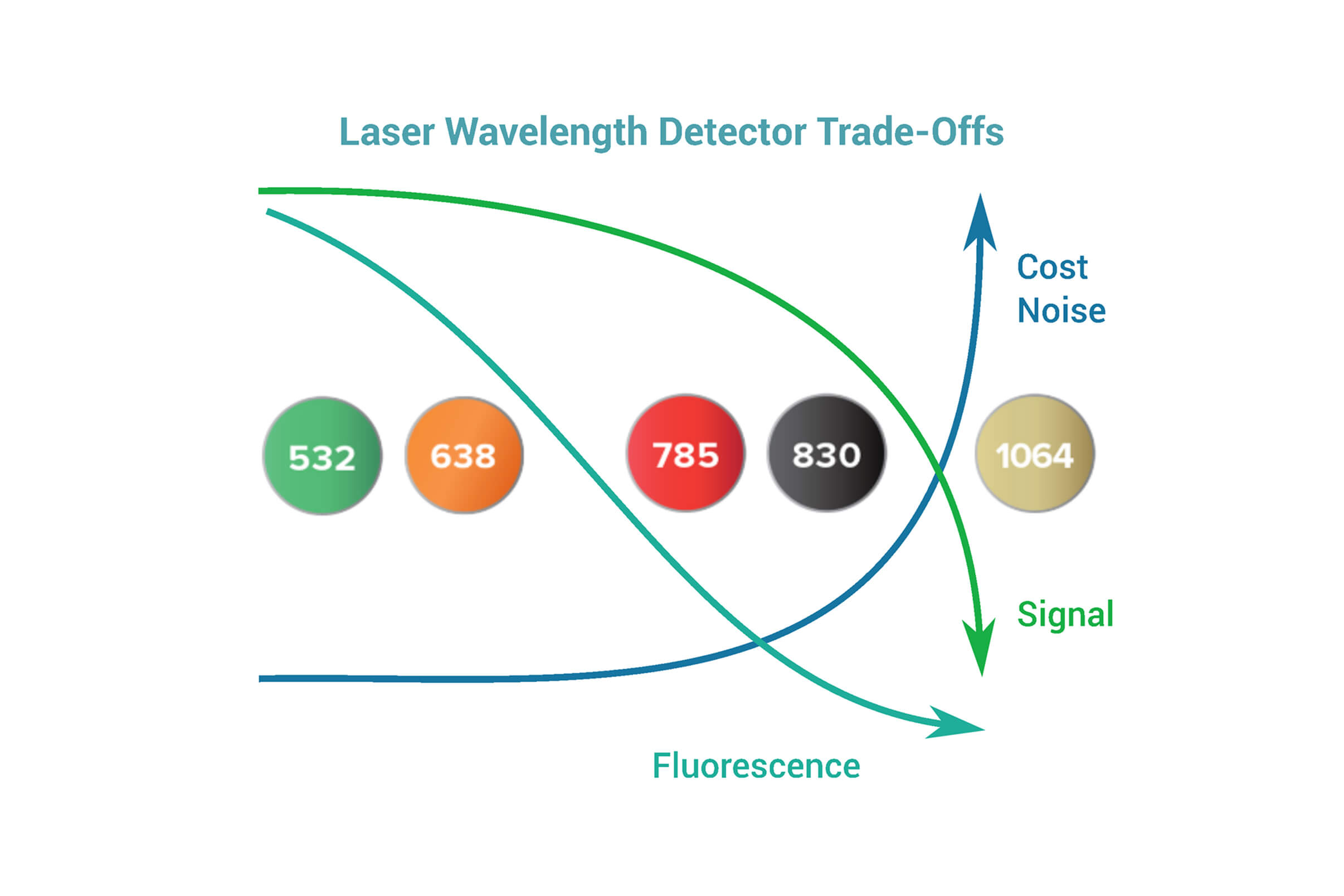
Raman scattering can, in principle, be generated using almost any excitation wavelength. The ideal wavelength, however, depends on balancing several Raman trade-offs, including autofluorescence, scattering efficiency, spectral range, detector sensitivity, laser size, power, and system cost. Rather than a single “best” wavelength, the optimal choice depends on your sample type, measurements priorities and use cases.
Features & Benefits
•
Selection from five common Raman excitation wavelengths to match the sample and application
•
Balanced fluorescence suppression, Raman strength, spectral range, integration and cost
•
Optimized Raman system configuration for the intended use case
Choose from five Raman excitation wavelengths optimized for your application.
Raman Wavelength Trade-Offs
Choose the excitation wavelength that best matches your application
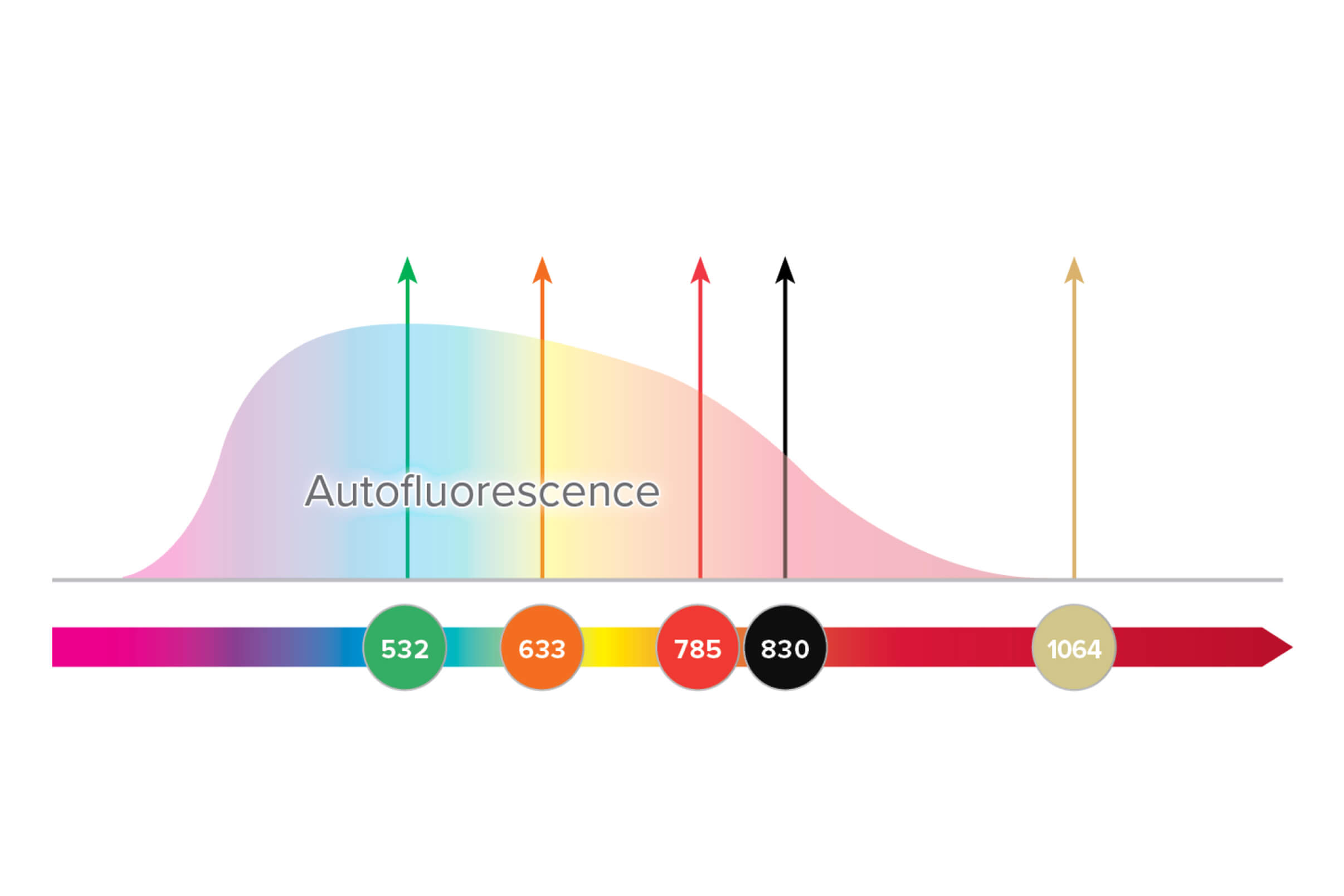
Sample autofluorescence vs wavelength
Sample Autofluorescence
Autofluorescence is the enemy of Raman spectroscopy. Longer laser wavelengths such as 785 nm, 830 nm, or 1064 nm reduce autofluorescence substantially compared to 532 or 638 nm, improving usable Raman signal quality for many real-world samples. For this reason, 785 nm has emerged as the most widely used general-purpose Raman wavelength, while 830 nm or 1064 nm may be preferred for particularly fluorescent materials..
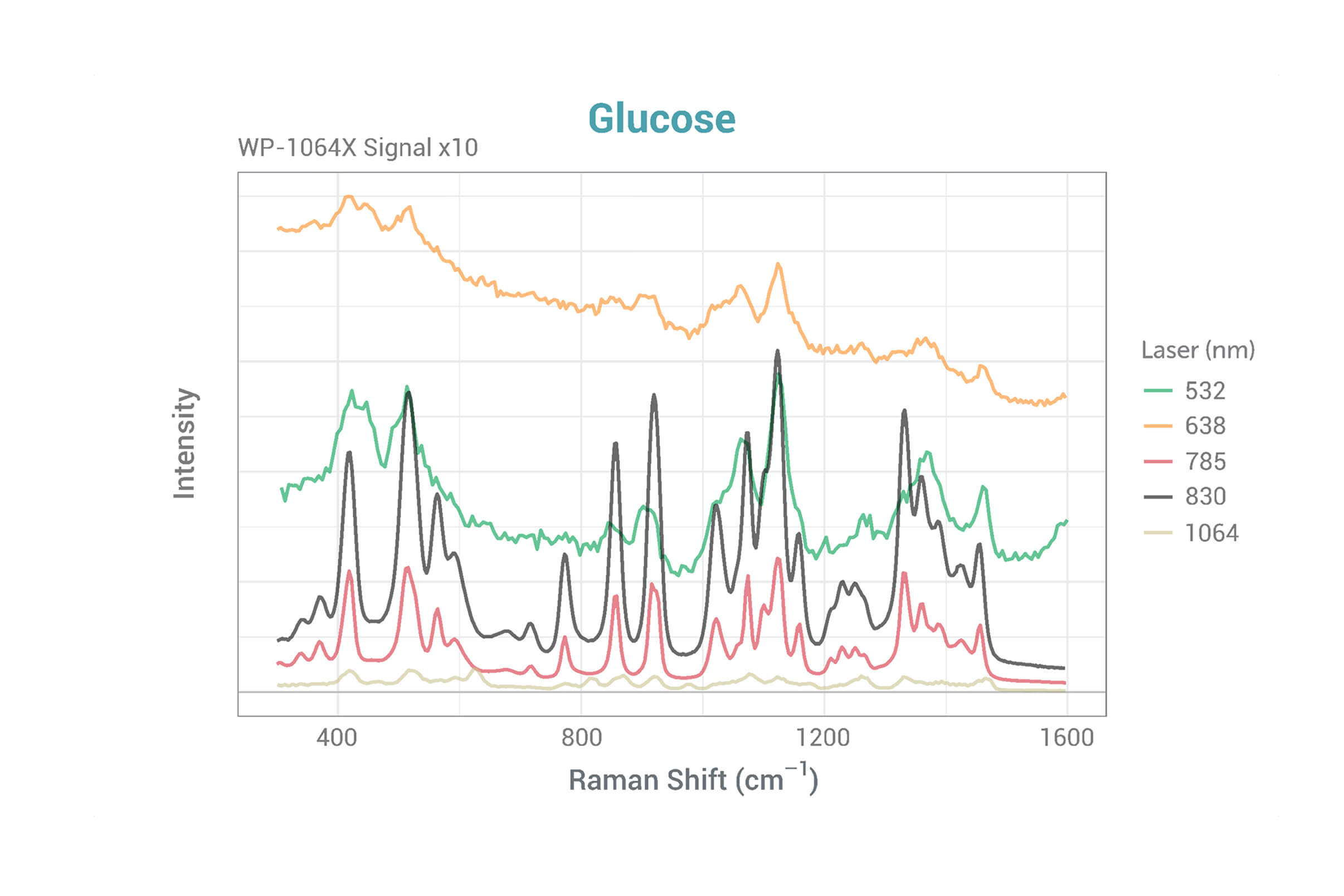
Reduction of the fluorescence background with longer excitation wavelength illustrated on the example of Raman spectra for common household glucose.
Raman Spectra vs Wavelength
The trade-off between Raman signal and autofluorescence is best observed when comparing the spectra from our X series models at all wavelengths from 532 nm to 1064 nm. We see lowest fluorescence but significantly lowest Raman signal at 1064 nm, whilst we see a high Raman signal on a high fluorescence background at 532 nm. 785 nm is an excellent compromise.
Laser wavelength impact on size, cost and output power
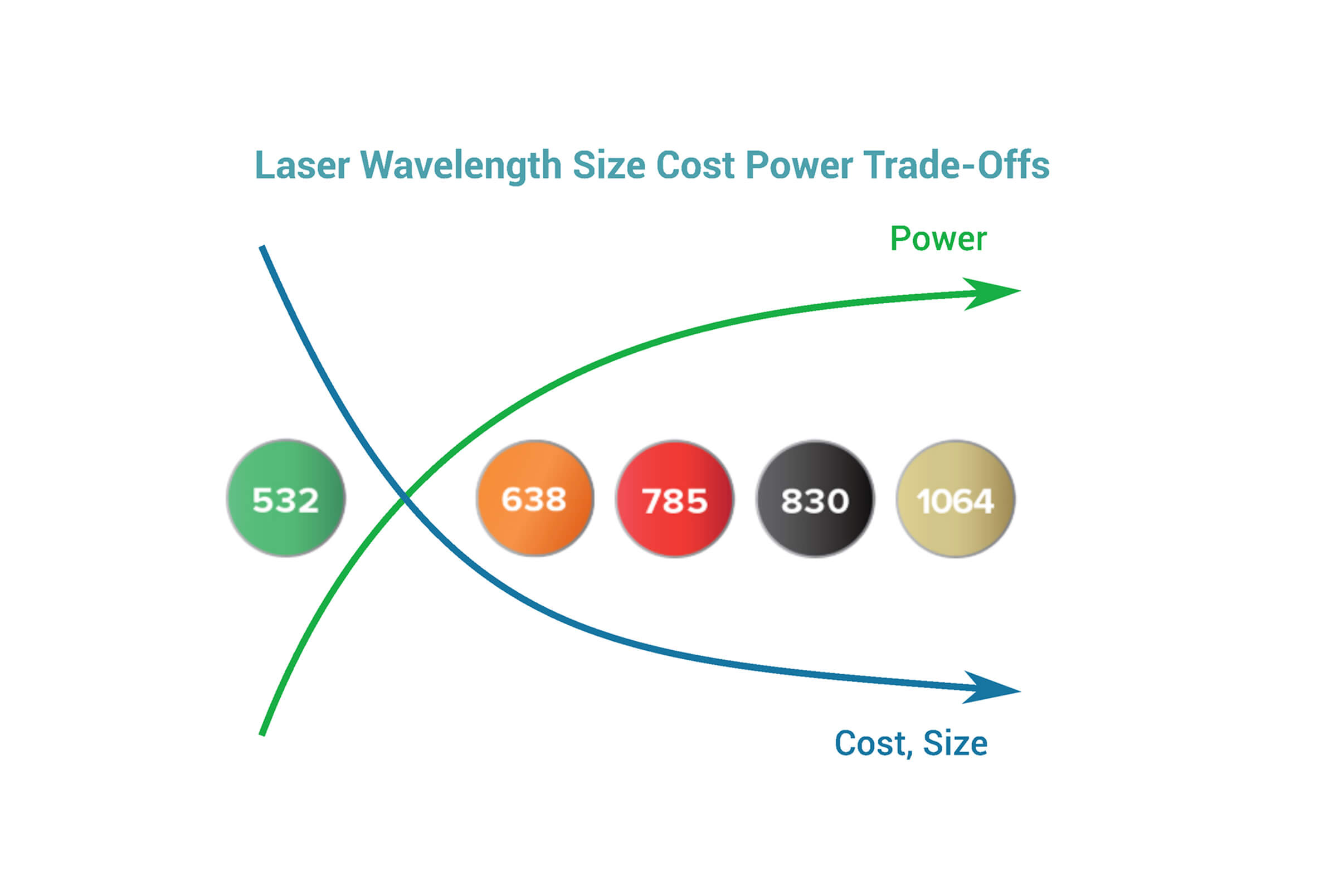
Power, Size, Cost
Different laser wavelengths are associated with different output power ranges, with 532 nm systems delivering lower powers compared to laser diodes (638, 785, 830, 1064 nm). The laser wavelength choice also affects the system integration option. For example, compact 785 nm diode lasers are readily integrated into Raman systems, supporting small form factors and software-controlled operation. In contrast, 532 nm systems require external lasers, increasing system complexity and cost.
Laser wavelength impact on detector
Detector Compatibility
Different excitation wavelengths require different detector technologies. Visible wavelengths such as 532 nm and 638 nm work well with standard silicon CCDs, while 785 nm and 830 nm benefit from NIR-enhanced CCDs. Moving to 1064 nm requires InGaAs detectors, which are more expensive, less sensitive, and show higher dark noise levels.
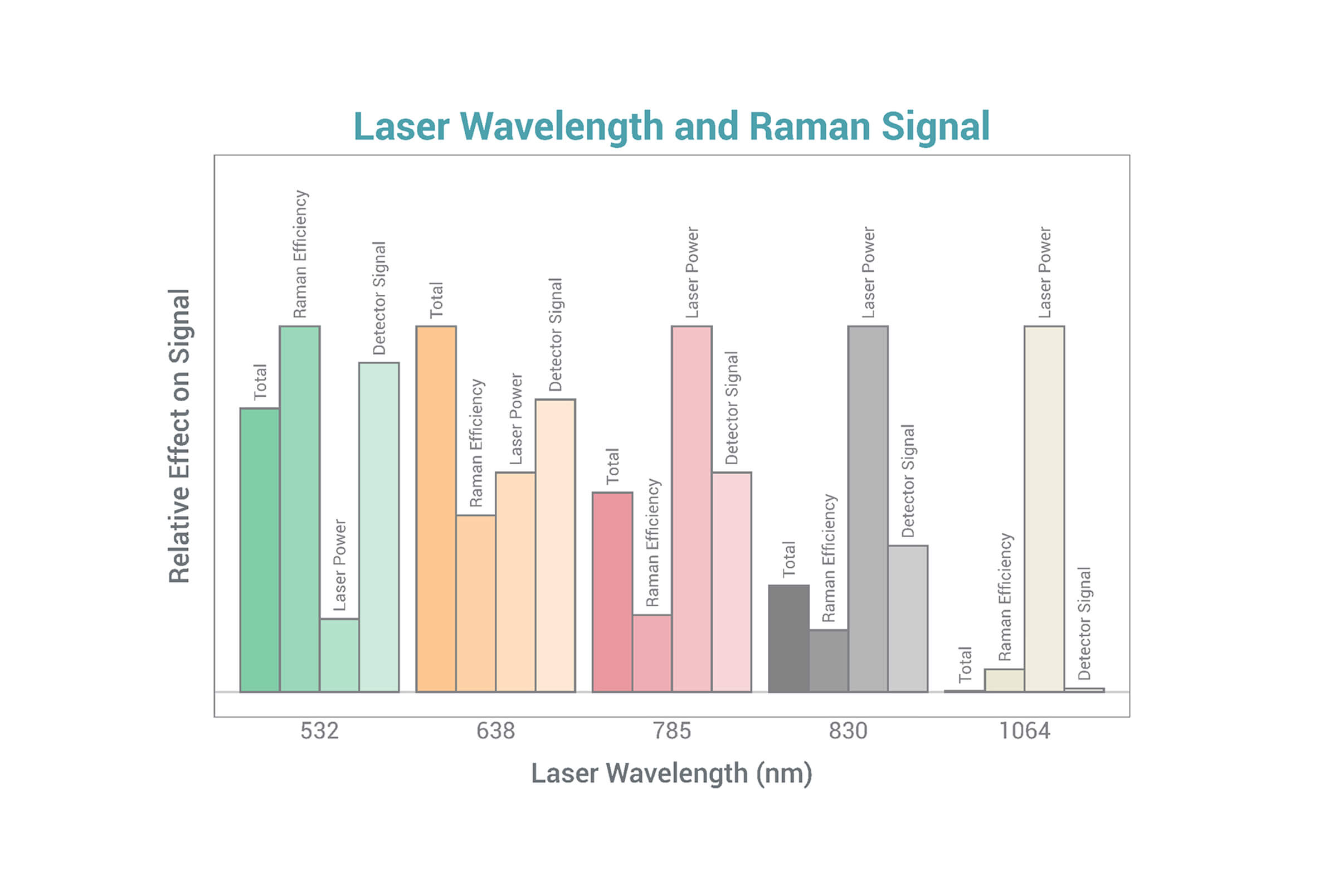
Effect of Laser Excitation Wavelength on the Factors Contributing to the Overall Raman Signal
Raman Efficiency
Raman scattering intensity increases with the fourth power of the laser frequency, making shorter-wavelength excitation in theory more efficient. In practice, however, this advantage is often offset by higher fluorescence background, reduced available laser power, and system integration trade-offs. As a result, optimizing Raman performance often depends more on overall signal-to-background ratio than on Raman scattering efficiency alone.
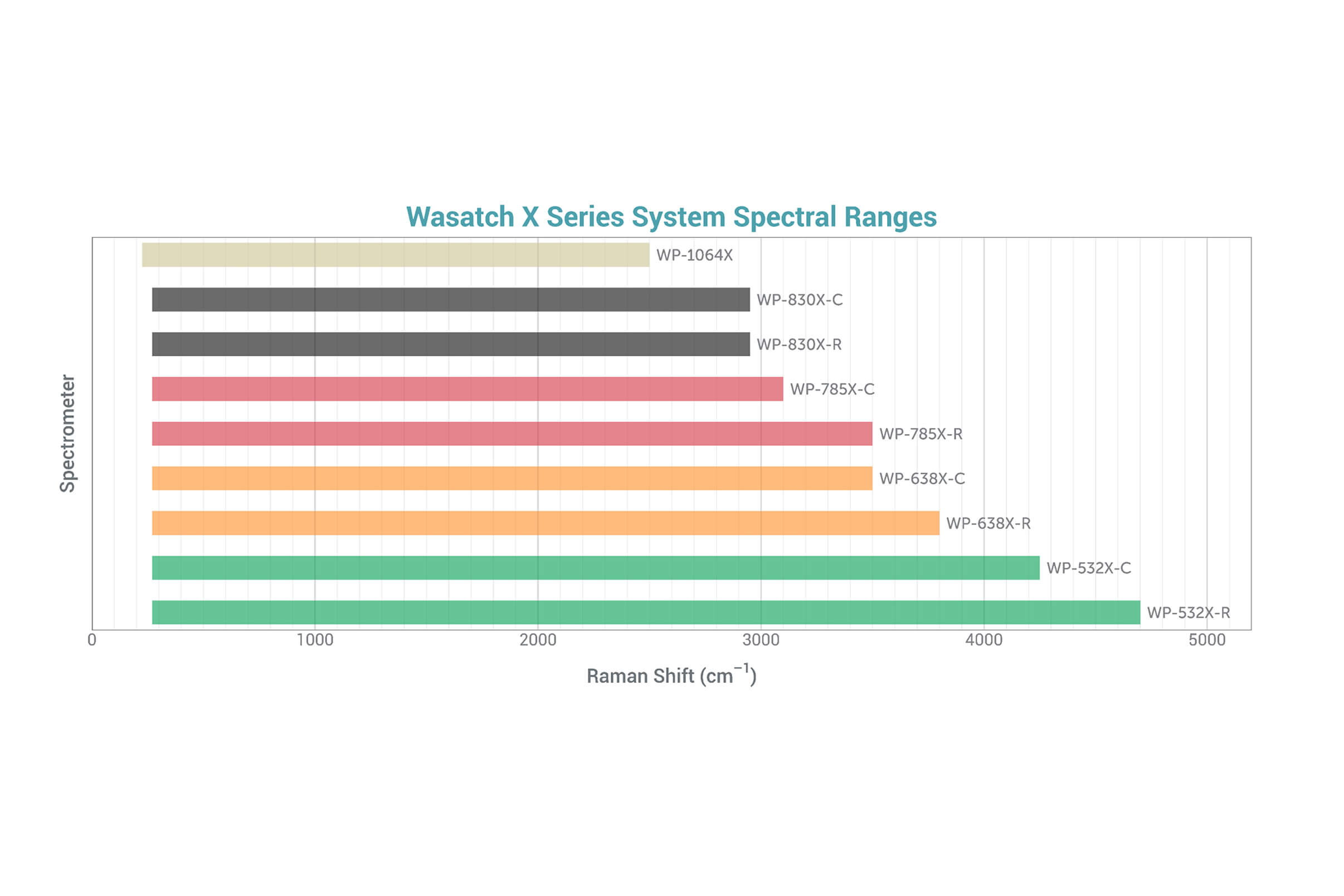
Raman spectral range for the WP X series
Raman Spectral Range
Raman shift is measured on a frequency scale, while spectrometers measure wavelengths. As a consequence, shorter wavelengths provide broader Raman shift coverage, while longer wavelengths improve spectral resolution. For example, a WP 638X R spectrometer covers even the OH and NH stretch region (up to 3800 cm-1), while a WP 830X spectrometer is limited to the CH stretches (2950 cm-1).
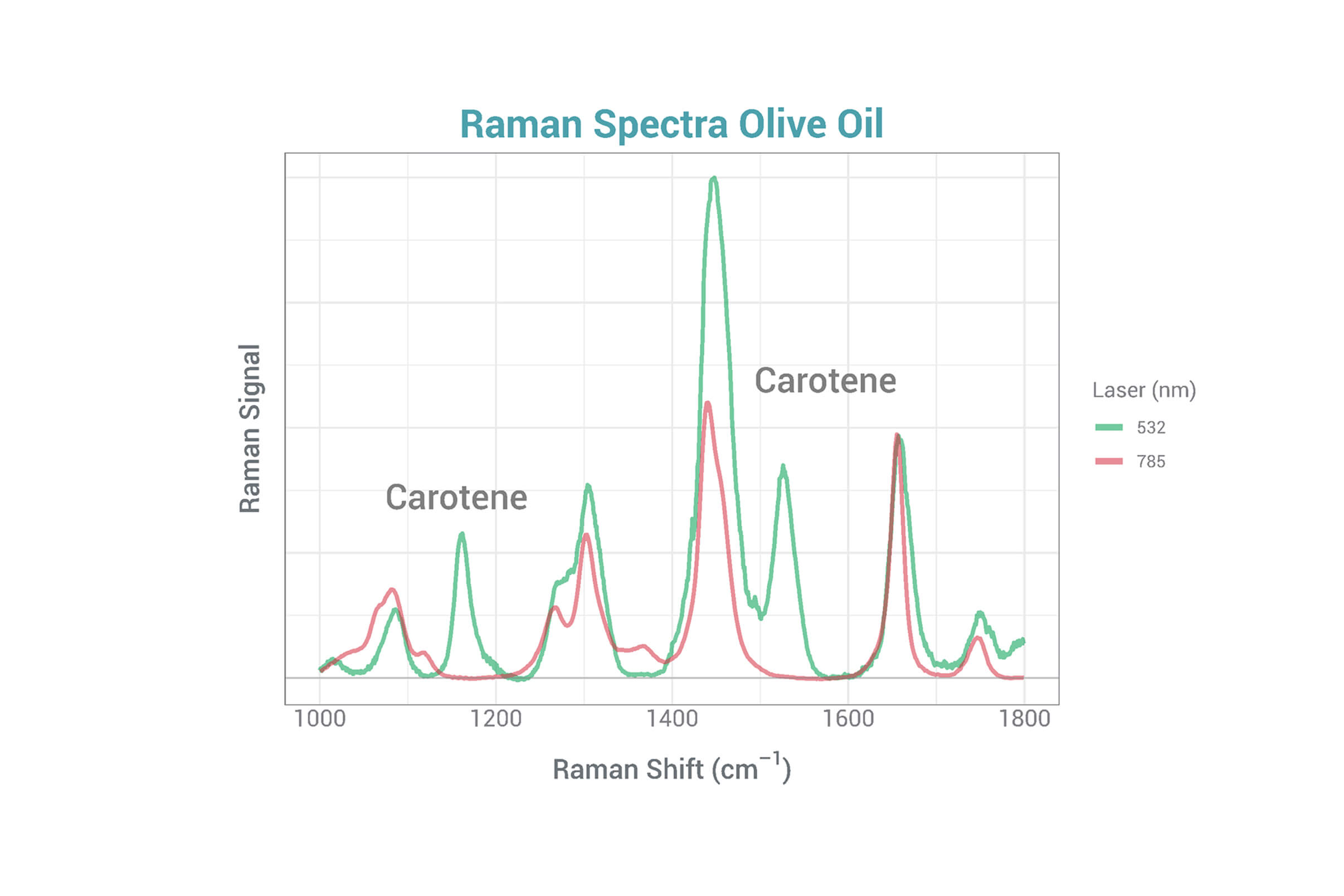
Resonance enhanced Raman signal at 532 nm
Special Applications
Certain applications benefit from specific excitation wavelengths. For example, 532 nm is used for resonance-enhanced detection of carotene in olive oil or the characterization of the bond structure or doping levels of graphene-like and diamond-like carbon surfaces.
Misty Johnson is responsible for taking care of our grating customers at the Logan, Utah, facility. She has been a member of the Wasatch Photonics team since 2009. By understanding her customers’ needs and goals, as well as the current grating market, Misty is able to provide a superior level of customer support. As Account Manager, she acts as a liaison between customers and Wasatch Photonics’ manufacturing department making sure that the lines of communication are always open.
Customer support is an integral part of Wasatch Photonics commitment to customers. Whether you are in the market to purchase a single grating, inquiring as a distributor, or purchasing large volume, Misty will guide you seamlessly through the custom design process. Misty strives to build trust and strong long term relationships with Wasatch Photonics customers. She brings 20 years’ experience as customer support manager from a number of manufacturing and service companies.