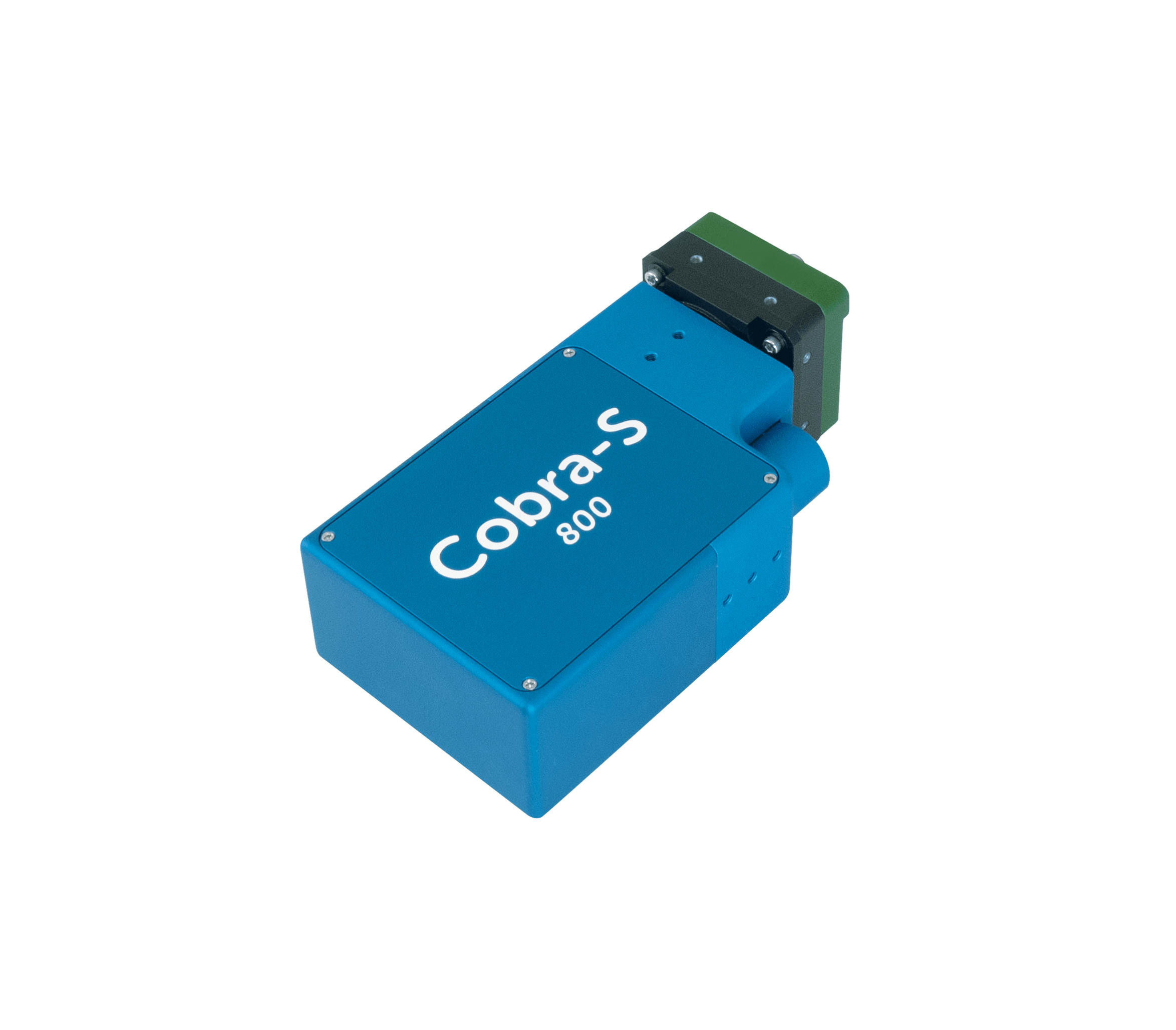
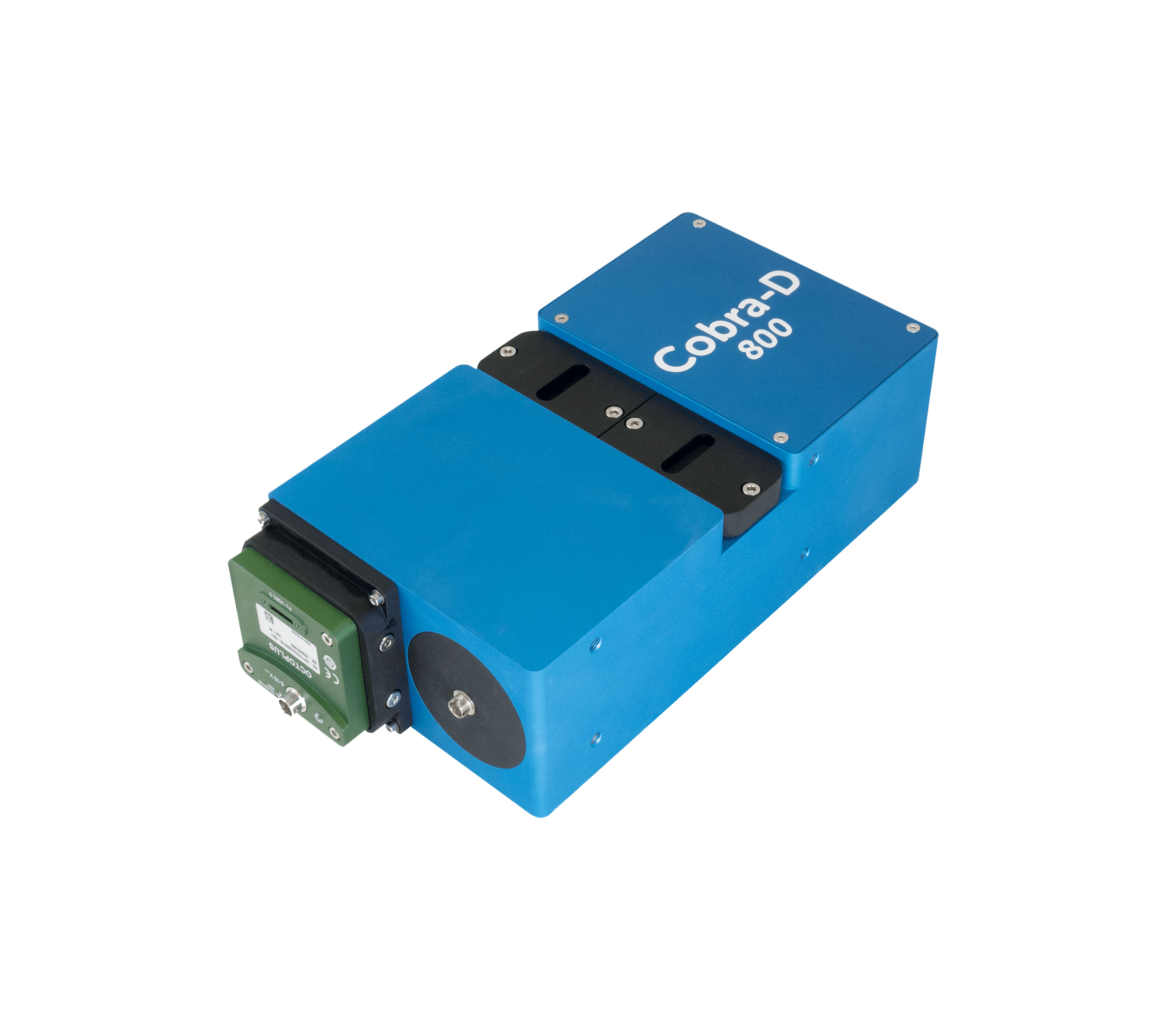
Cobra D spectrometers at the leading edge of laser weld
OCT offers a significant breakthrough in monitoring laser weld quality. While historical approaches relied on indirect methods such as emitted light intensity or acoustic emissions—providing only qualitative insight—OCT enables direct measurement by capturing instantaneous keyhole depth and morphology during welding.
It has been demonstrated that OCT can resolve keyhole depth variations on the order of micrometers with microsecond temporal resolution, allowing observation of transient instabilities previously invisible to other methods.
Furthermore, OCT-derived signals correlate strongly with weld quality; variations in keyhole depth and fluctuation frequency have been linked to porosity formation. Recent work integrates OCT data with machine learning models to classify weld quality in real time, enabling defect prediction before solidification. This represents a major advance over traditional post-process inspection methods. Such applications require high-fidelity signals, necessitating high-throughput optical modules with large imaging depth.
Features & Benefits
•
Best in class imagining depth performance achieved by unique opto-mechanical design based on patented HD VPH Gratings
•
Ability to operate up to 250kHz for high speed production validation
•
Increased confidence in busbars and battery tab connector weld performance
•
Increased manufacturing throughput
•
Pre process (seam tracking) and post process (seam inspection) monitoring
•
Cobra D is a robust, field proven spectrometer
We offer precision, high-speed spectrometers with patented HD VPH gratings for robust industrial inspection and process monitoring.
Laser Welding in Action
Pre-process
Seam and Edge Tracking: The system accurately locates the joint’s edge or seam position in 3D (X, Y, and Z directions). This allows for precise positioning of the processing laser, even if the workpiece is displaced or suffers from thermal warpage.
Post-process
Seam Inspection for surface defect detection: The system automatically flags pores, blowholes, and cracks by identifying sudden depth deviations that exceed preset limits.
In process
At the Melt Pool: The OCT sensor measures the keyhole depth directly. If the keyhole becomes too shallow (lack of penetration) or too deep (risk of burn-through), the system can signal an immediate adjustment of laser power.
Misty Johnson is responsible for taking care of our grating customers at the Logan, Utah, facility. She has been a member of the Wasatch Photonics team since 2009. By understanding her customers’ needs and goals, as well as the current grating market, Misty is able to provide a superior level of customer support. As Account Manager, she acts as a liaison between customers and Wasatch Photonics’ manufacturing department making sure that the lines of communication are always open.
Customer support is an integral part of Wasatch Photonics commitment to customers. Whether you are in the market to purchase a single grating, inquiring as a distributor, or purchasing large volume, Misty will guide you seamlessly through the custom design process. Misty strives to build trust and strong long term relationships with Wasatch Photonics customers. She brings 20 years’ experience as customer support manager from a number of manufacturing and service companies.