Match cooling, sensitivity, size, and power draw to your application
Raman detector technology has evolved dramatically. While early Raman systems often depended on liquid nitrogen cooled cameras for long integrations, modern Raman applications achieve excellent results with moderately cooled or even uncooled sensors. Detector choice is no longer just defined by cooling level alone. Expected integration time and signal levels, spectral range, pixel size, detector sensitivity, system complexity, power requirements and budget are equally important considerations. Wasatch offers multiple detector classes so you can select the most practical performance level for your application.
Features & Benefits
•
Balanced cooling level and measurement time against system size and power draw
•
Optimized detector selection for wavelength range, signal regime and deployment environment
•
Comparable high sensitivity and signal-to-noise performance across all detectors
•
Avoidance of unnecessary cooling in shot-noise-limited applications
Balance cooling, size, power draw, and time by choosing detectors for wavelength and signal, as all offer high sensitivity without needing excess cooling.
Detector Choice Impacts
Comparing detector options
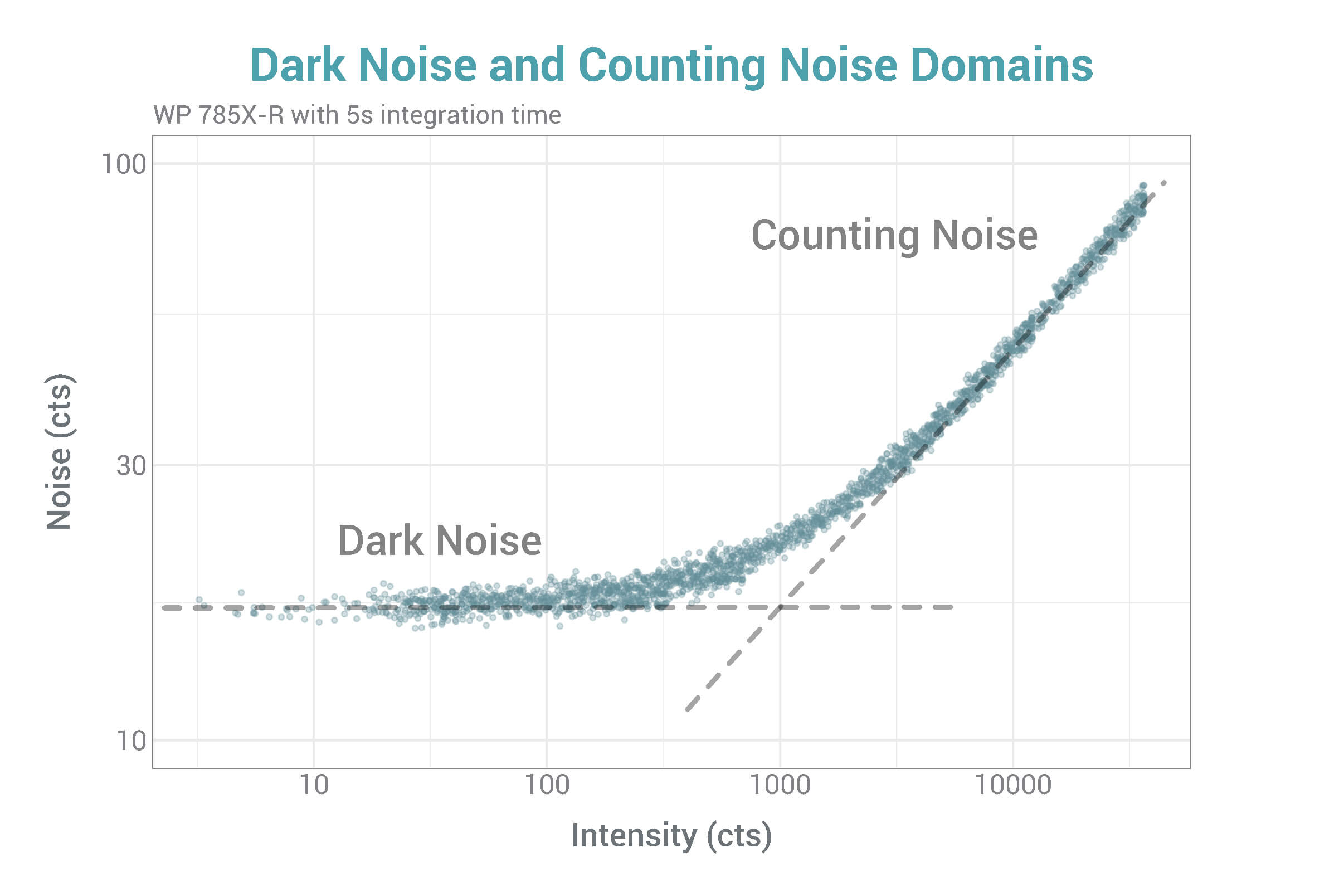
Small signals below about 1000 counts are dominated by dark noise, which can be reduced with cooling, strong signals above about 1000 counts are dominated by counting (shot) noise, which is independent of cooling.
Signal to Noise
In most Raman applications, signal quality is not dominated by dark noise, but by fundamental photon counting statistics (“shot noise”). Once Raman signals are sufficiently strong cooling has no longer an effect on the overall signal-to-noise ratio. For Wasatch Raman systems, as a rule of thumb, this transition happens at roughly 1000 counts. Detector cooling therefore primarily extends usable integration time for weak signals rather than improving the noise level of strong signals.
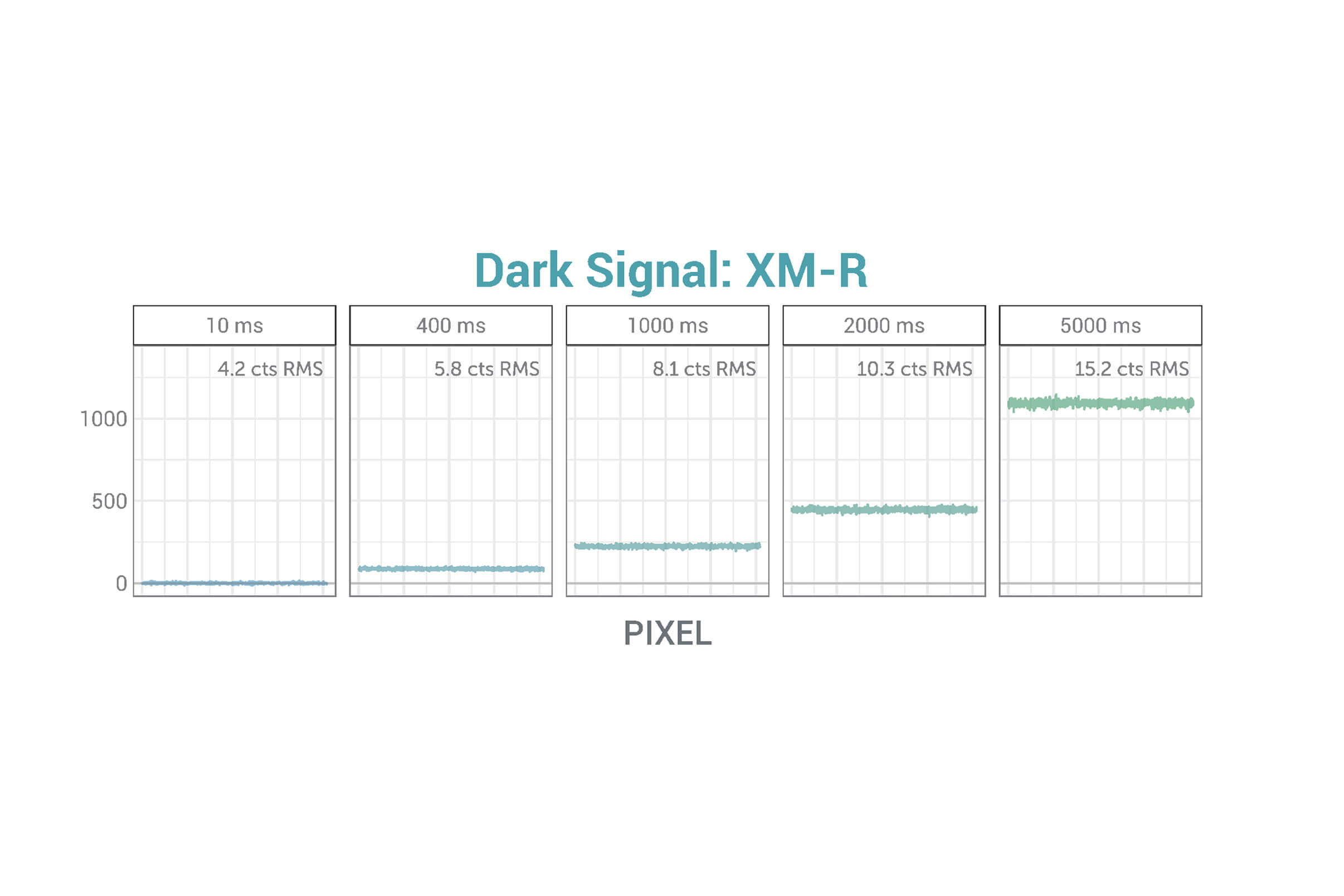
Dark signal and dark noise changes with integration time for -R detector in XM series. The –R detector can be used for integrations up to 5-10 seconds as shown.
Portable OEM Application (XM)
For more demanding portable applications, the XM platform offers stronger signal, improved resolution, and a temperature-stabilized scientific CCD in a compact OEM-ready footprint. Designed for robust field deployment, the XM builds on Wasatch’s proven transmission optics architecture and serves as a flexible, high-performance Raman engine for your fingerprint-region, portable, Raman development.
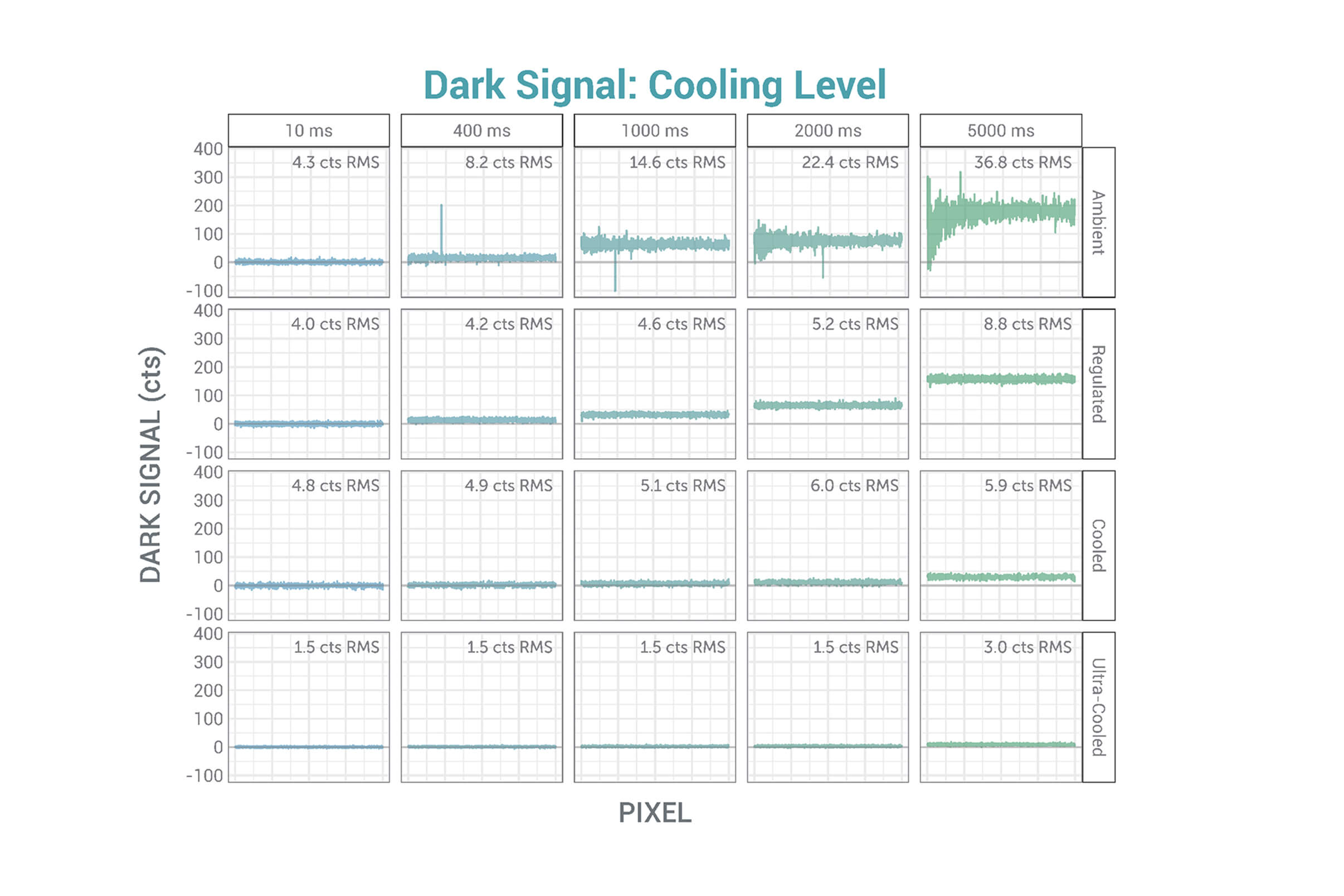
Dark signal and dark noise changes with integration time for four different cooling levels: Ambient (IMX detector, XS), Regulated (-R detector, XM and X), Cooled (-C detector, X), and Ultra-Cooled (Andor camera, XL).
Dark Signal and Dark Noise
All detectors generate a signal even in the absence of light, the so-called dark signal. While dark signal itself is subtracted during dark correction, the associated dark noise remains and can affect weak Raman signals. The dark signal increases with integration time, but cooling reduces this signal by 2x for every 7°C of temperature decrease, cooling is therefore especially important for long measurement times.
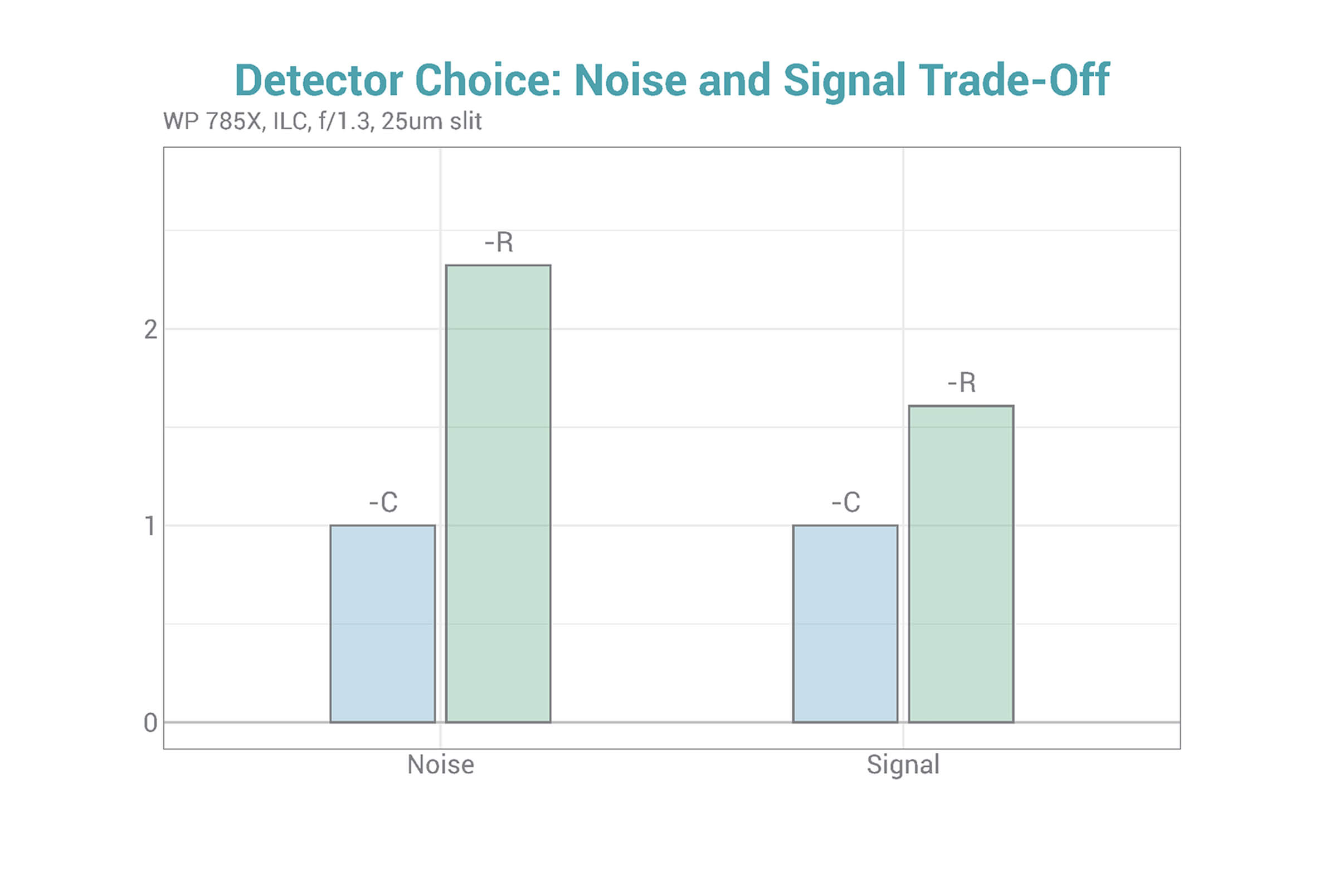
Trade-off between Noise and Signal for –C and NIR-enhanced –R detectors (785, 830 nm systems). 60% higher signal for –R, but about 2x higher dark noise.
NIR Enhancement
A special surface treatment (provided with the -R detectors used for the 785 and 830 nm Raman systems) significantly improves the sensitivity in the important wavelength range above 900 nm (‘NIR enhancement’), but leads to higher dark noise.
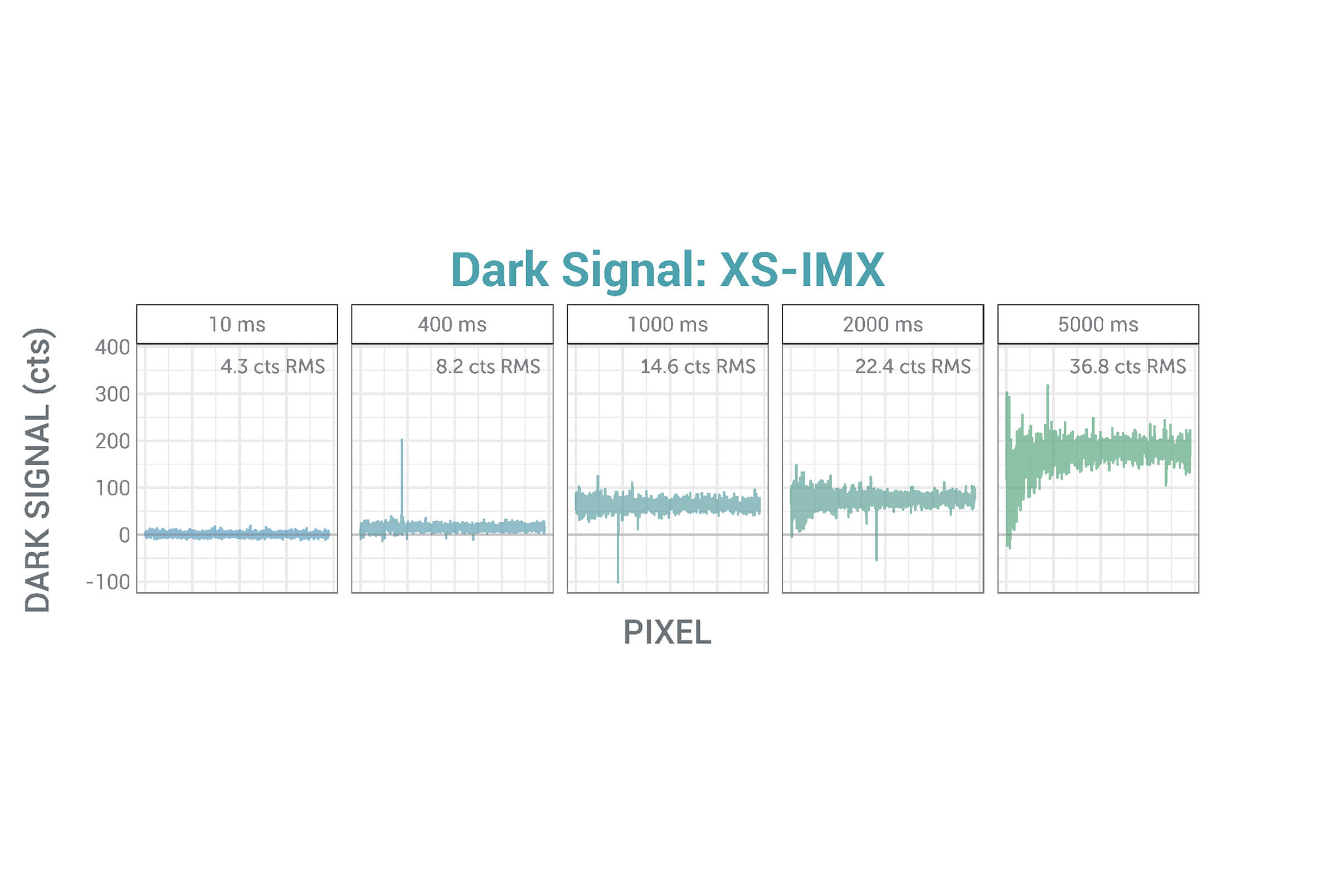
Dark signal and dark noise changes with integration time for IMX detector in XS series. Integration times above 2s are not recommended for this ambient detector.
Ambient Sensors (XS System)
Optimized for minimal size, weight, and power draw, this ambient detector enables true handheld Raman deployment where mobility is the priority. To avoid any drifts, dark signals should be measured for every new spectrum and due to the higher dark noise, measurement times should be kept under 2 seconds.
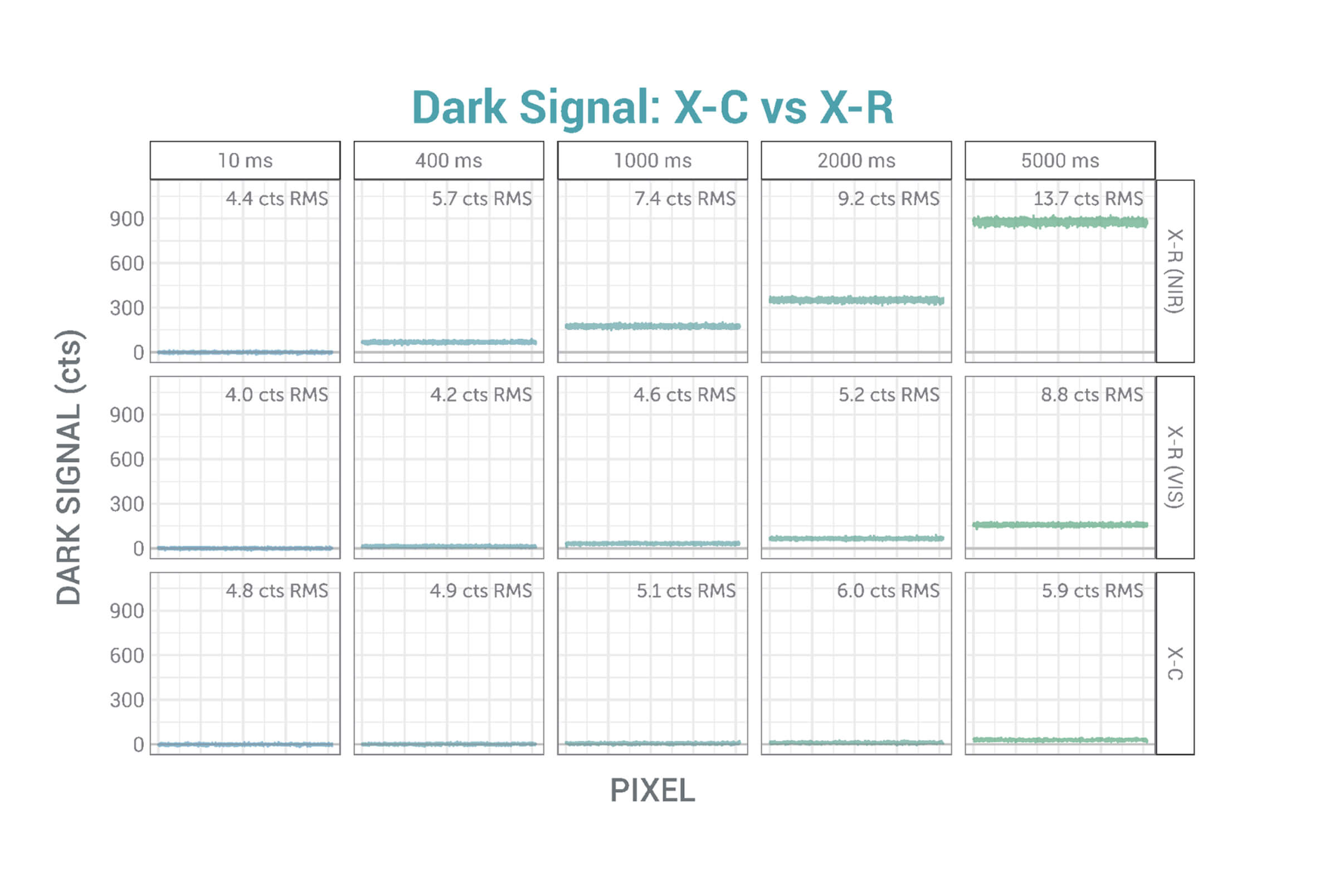
Dark signal and dark noise changes with integration time for -R and –C detectors in X series. The NIR wavelengths (785 nm, 830 nm) use a different, NIR-enhanced, –R detector than the VIS wavelengths (532 nm, 638 nm).
Regulated Sensors (-R, XM and X Series)
A single-stage TEC stabilizes temperature at 10°C, improving reproducibility and extending the usable integration time range with only a modest increase in power draw and form factor compared with ambient sensors.
Cooled Sensors (-C, X Series)
Dual-stage TEC sensors provide additional cooling down to -15°C. This deeper cooling enables longer integration times, up to one minute, for very weak signals, but it also increases power draw and cost compared with the -R sensor. For very strong, near-saturation signals, the -C detector also delivers higher signal-to-noise ratios due to its deeper CCD wells.
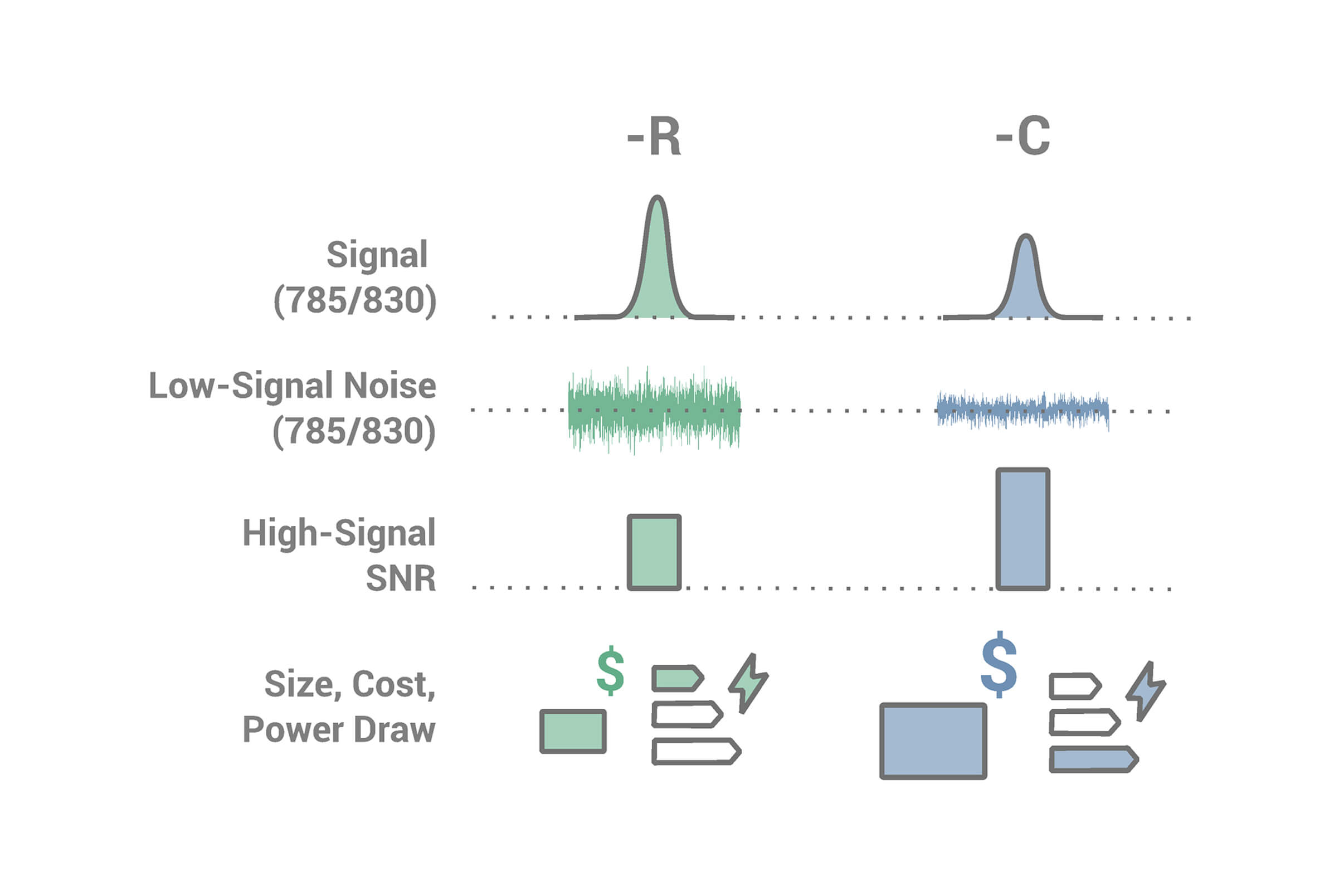
Trade-offs between –R and –C detectors for X series spectrometer, considering the sensitivity, noise, signal-to-noise at saturation, and size/cost/power.
Comparison of -R and -C Detectors Figures of Merit
Detector selection involves practical trade-offs. The -R is the top-selling sensor and the preferred choice for portable and handheld Raman instruments. It is the most cost-effective option and works especially well with Wasatch optical benches, whose high-throughput design delivers sufficient Raman signal from even weak emitters at integration times under 10 seconds.
The -C sensor provides the highest signal-to-noise performance, making it the preferred detector for best-in-class Raman measurements and is the typical choice for research laboratory applications.
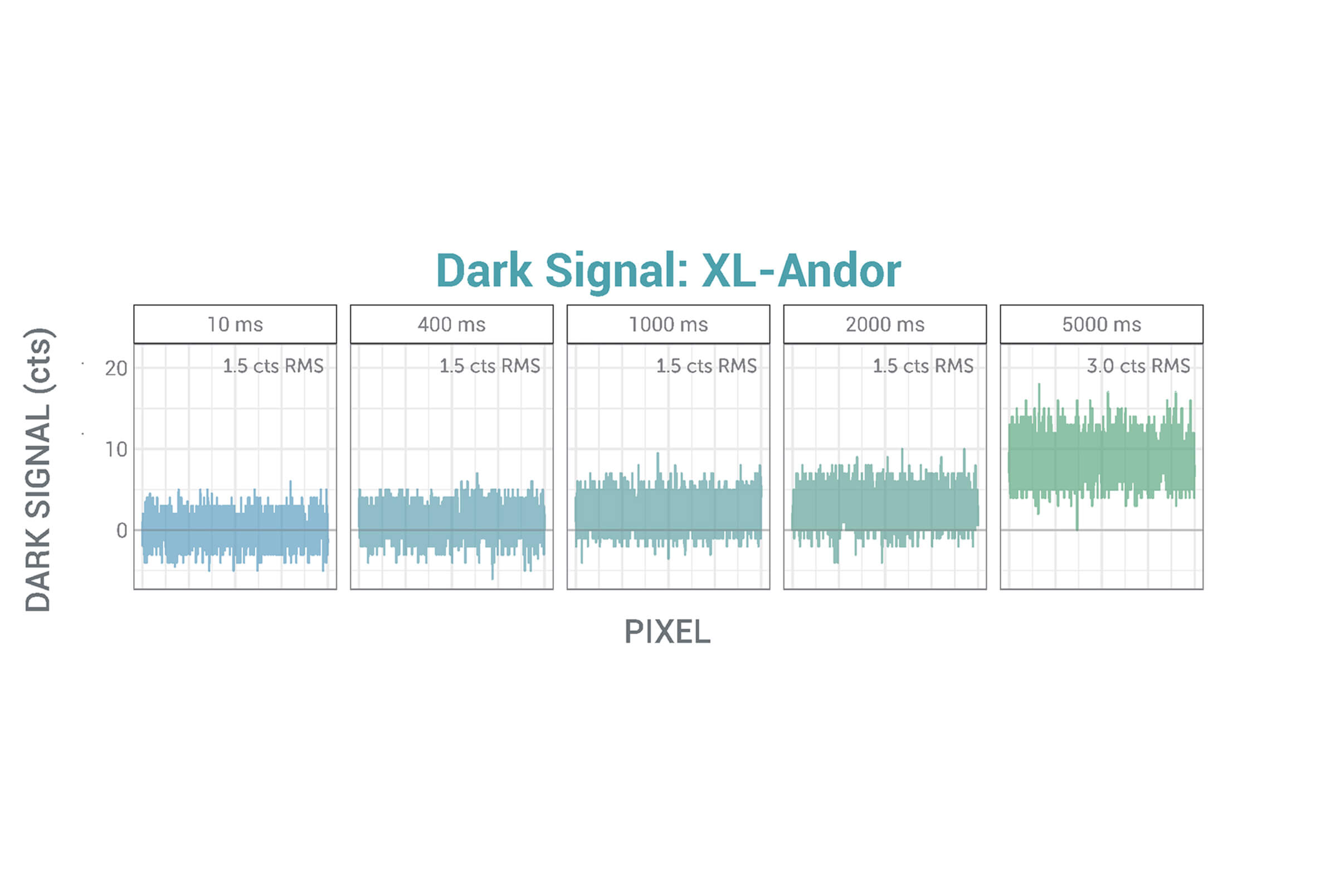
Dark signal and dark noise changes with integration time for the ultra-cooled detector in the XL series.
XL Series: Andor iVac 316 Sensors
For the lowest dark signal and longest integration times, an ultra-cooled scientific camera (-60°C) is available with the XL system for the most demanding research application. This camera also allows custom readout approaches for multiplexing.
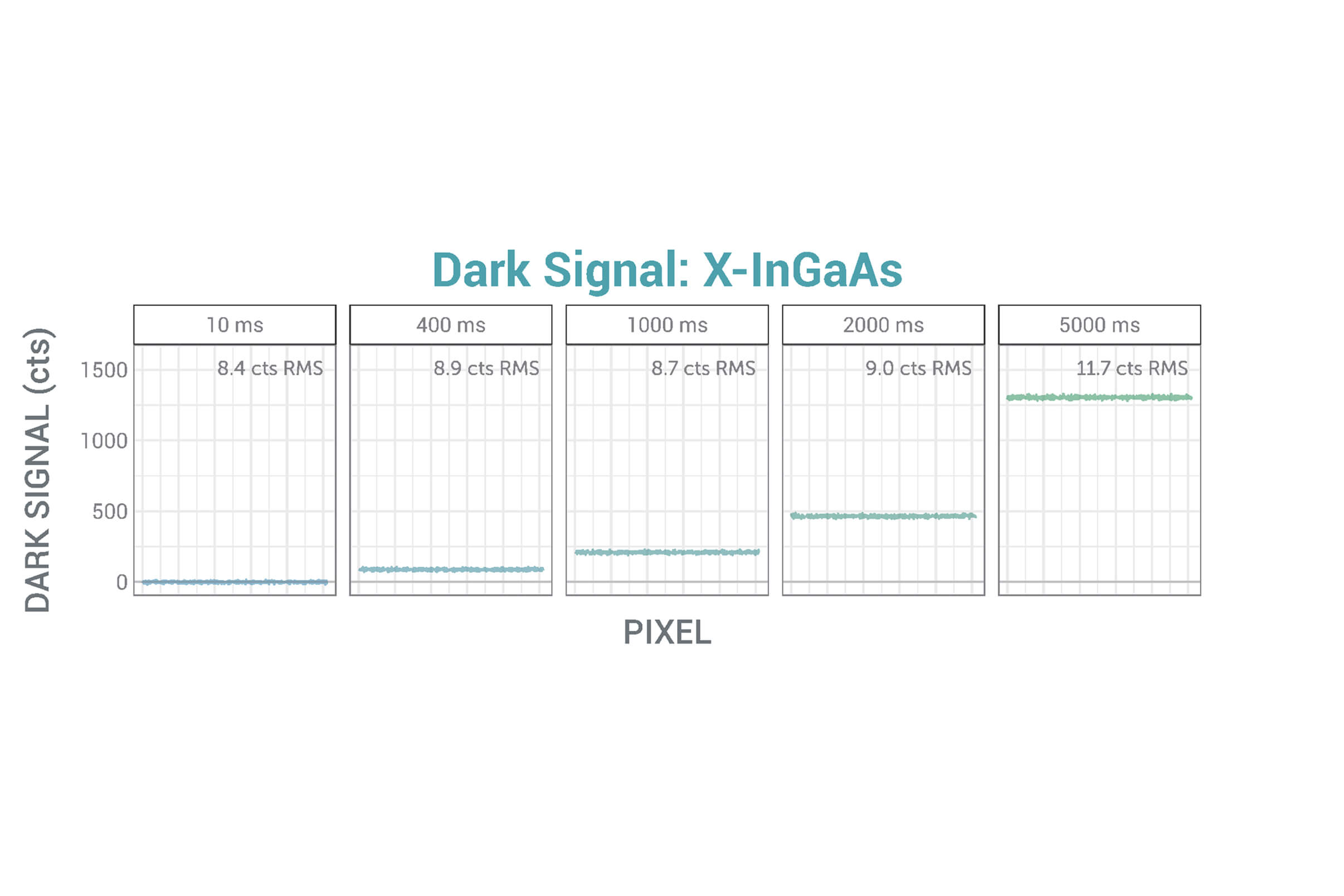
Dark signal and dark noise changes with integration time for InGaAs detector in WP 1064X Raman systems.
WP 1064X Series: InGaAs Sensors
Due to the longer wavelengths, the Raman emission from 1064 nm Raman systems is recorded with a different sensor type (InGaAs), which is cooled to -15°C. This sensor type has a higher dark signal and dark noise compared to a silicon CCD, but lower signal to noise due to its different architecture.
Misty Johnson is responsible for taking care of our grating customers at the Logan, Utah, facility. She has been a member of the Wasatch Photonics team since 2009. By understanding her customers’ needs and goals, as well as the current grating market, Misty is able to provide a superior level of customer support. As Account Manager, she acts as a liaison between customers and Wasatch Photonics’ manufacturing department making sure that the lines of communication are always open.
Customer support is an integral part of Wasatch Photonics commitment to customers. Whether you are in the market to purchase a single grating, inquiring as a distributor, or purchasing large volume, Misty will guide you seamlessly through the custom design process. Misty strives to build trust and strong long term relationships with Wasatch Photonics customers. She brings 20 years’ experience as customer support manager from a number of manufacturing and service companies.