Trusted, reliable, vertically integrated OCT spectrometers
Vertical integration defines Wasatch’s approach to OCT spectrometer supply: our patented, industry-leading VPH gratings sit at the core of a broad, pre-configured Cobra series lineup. Built on opto-mechanically robust designs, these units deliver high SNR and strong roll-off performance for clear imaging. Add OCT-specific software development kits, internal expertise, and high-volume manufacturing, and Wasatch becomes a dependable partner for application needs at any scale.
Why Choose Wasatch?
What Sets Us Apart:
•
Preconfigured SD-OCT Cobra spectrometers for diverse applications
•
Patented VPH gratings for high efficiency & low polarization dependence
•
Optimized opto-mechanical design for high efficiency, SNR & image clarity
•
Flexible camera speeds & connectivity options
•
OCT-specific SDKs for streamlined data acquisition & analysis
•
In-house OCT expertise tailored to your application
•
Scalable OEM manufacturing for high-volume production
Application-ready SD-OCT spectrometers with patented optics, advanced software, expert support, and scalable OEM manufacturing.
Why Wasatch for OCT
Trusted, reliable, vertically integrated OCT spectrometers
High Efficiency at All Wavelengths
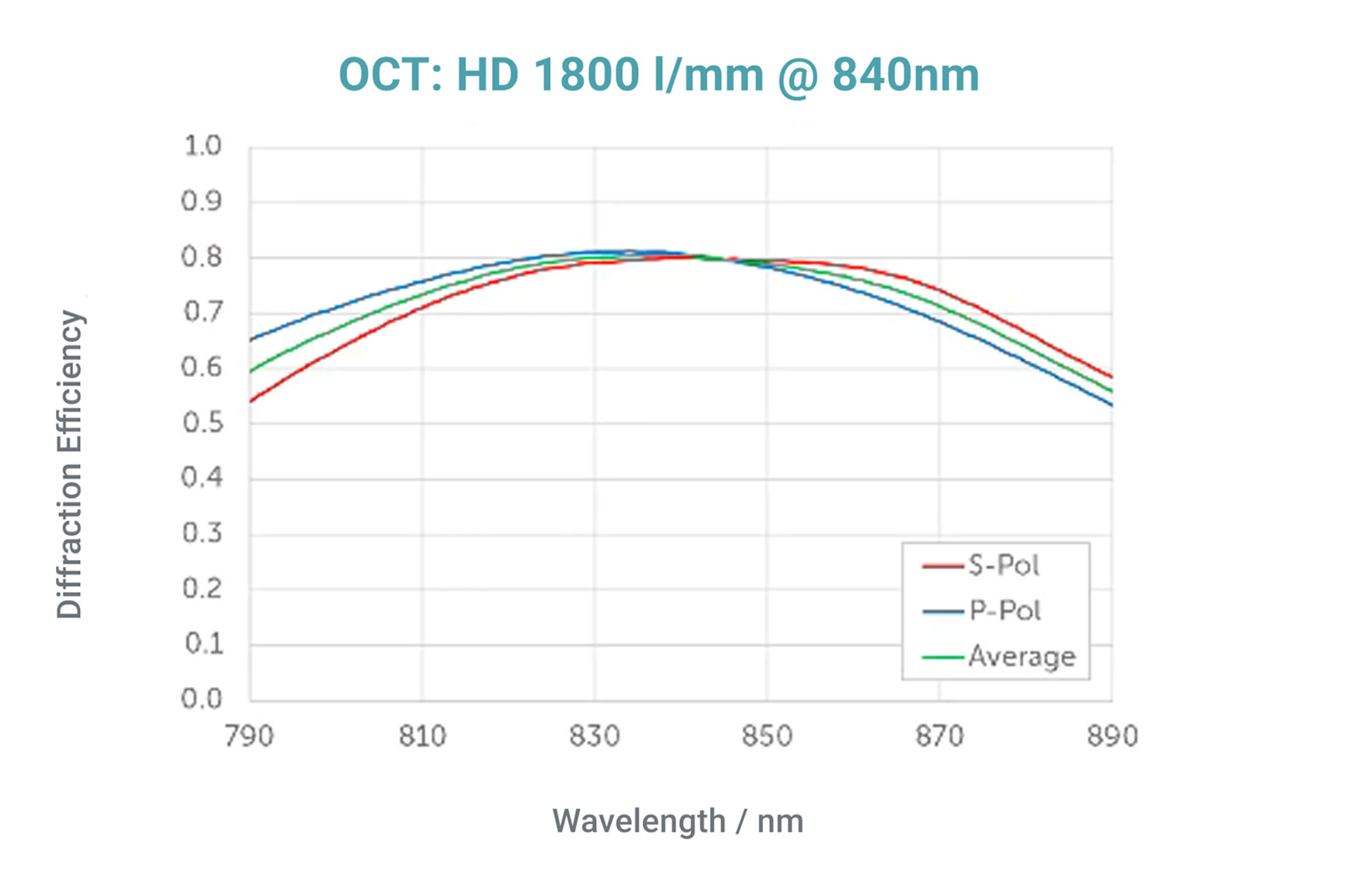
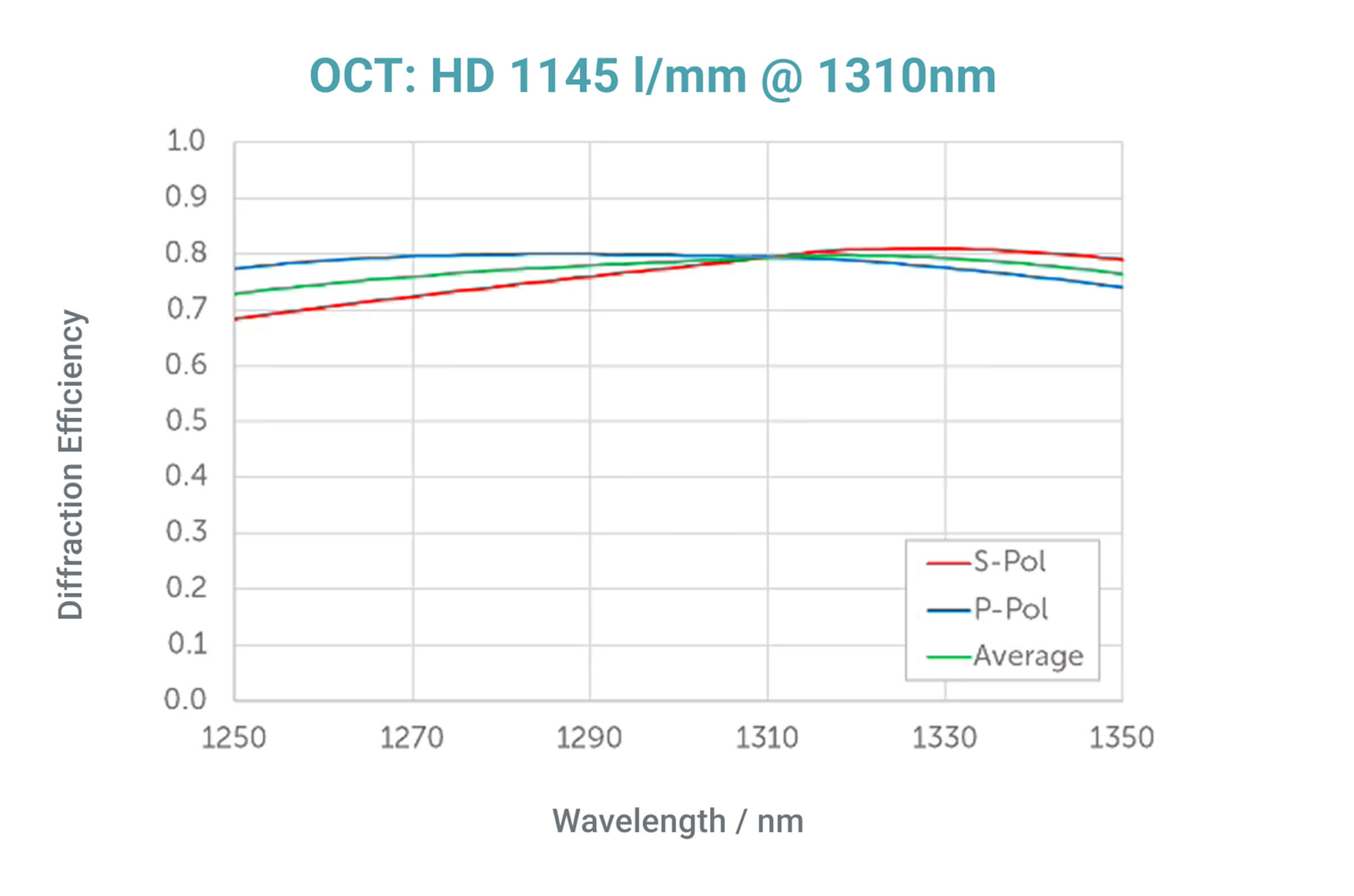
The reflected light in OCT is very low intensity; therefore, a highly sensitive spectrometer will substantially improve image quality. And since OCT uses a Fourier transform of the spectrum, every wavelength in that spectrum is important. The more uniform the spectrometer response is with wavelength, the better the image quality. Use of a high efficiency, broadband grating in the spectrometer is very important, and Wasatch Photonics offers the industry standard, patented HD gratings.
OCT is an interferometric technique, often using fiber optics for transmission. This makes the system highly sensitive to polarization changes. While most components in a spectrometer are polarization-insensitive, gratings that have strong polarization dependence are not suitable for OCT imaging. Wasatch VPH transmission gratings designed for OCT have very low polarization sensitivity, which is why Wasatch Photonics is the leading supplier of OCT gratings worldwide.
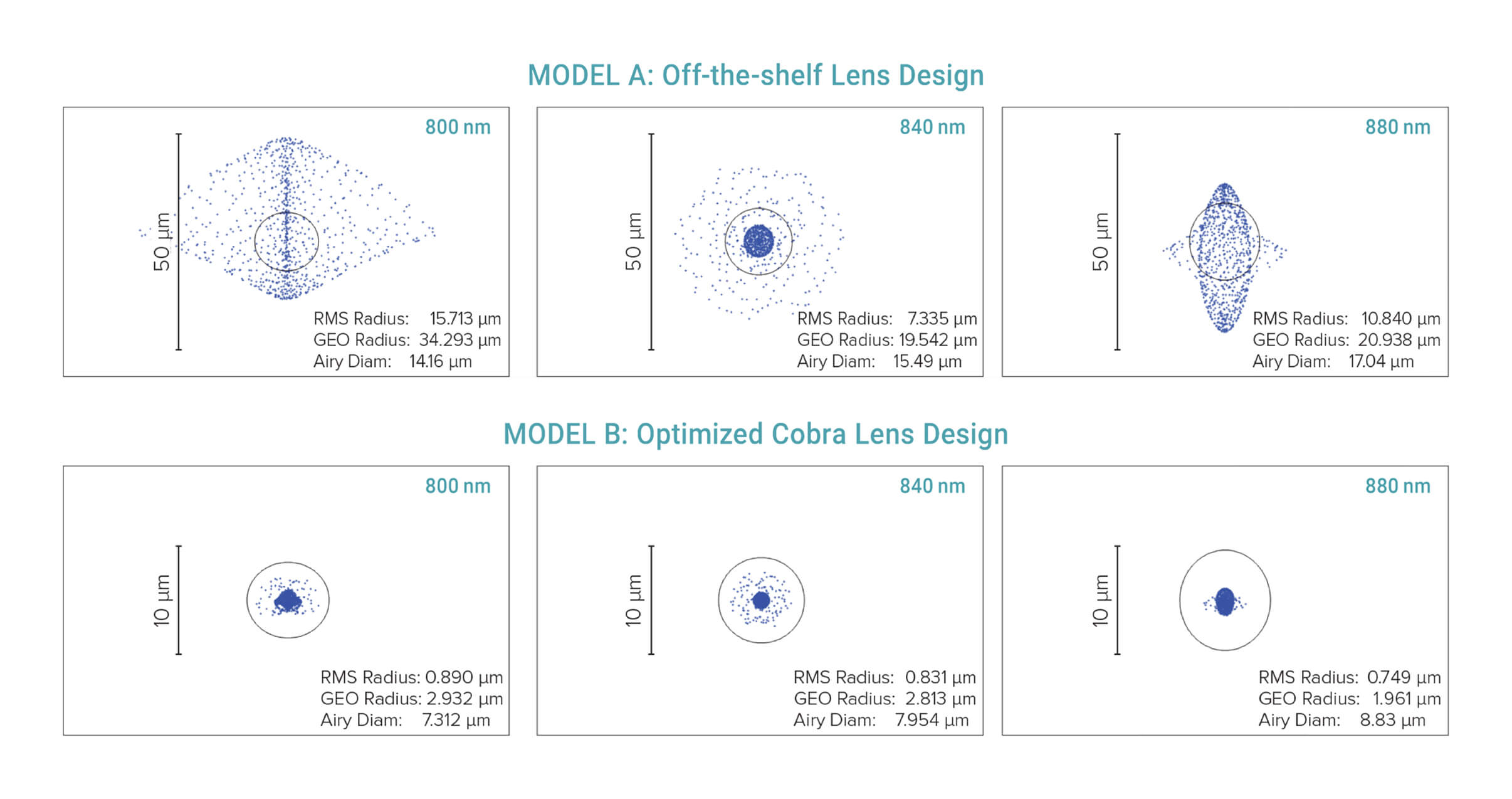
Model A: The quality of focus onto an OCT camera is much poorer with an off-the-shelf lens design than with the custom, optimized lens sets used in our Cobra OCT spectrometers. Model B: A combination of high efficiency, low polarization-sensitivity, and diffraction-limited optical design reduces roll-off in our Cobra-S OCT spectrometers.
Diffraction-limited Optical Design
Off-the-shelf optics often fail to deliver high clarity OCT images because excellent optical resolution is essential for low roll off and thus good imaging depth. The spot size of light imaged on each camera pixel must be small to avoid spreading to neighboring pixels, and this must be true for the wide range of wavelengths used in the spectrometer. At Wasatch Photonics, we design and source custom lens sets that match our spectrometer designs perfectly, yielding optimized spectrometer performance for OCT at all wavelengths that far outperforms use of off-the-shelf lenses.
A High-speed, High-fidelity Camera
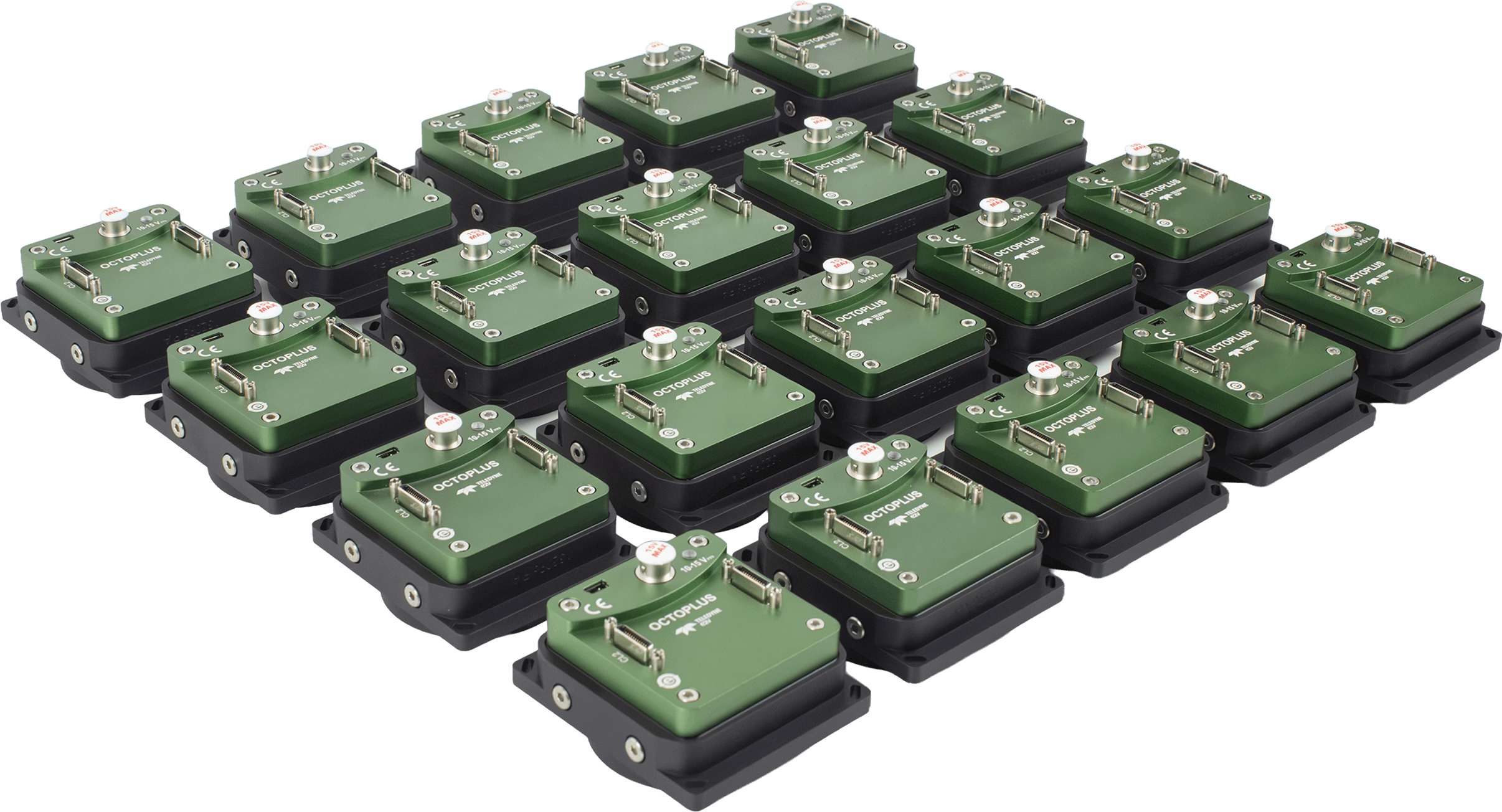
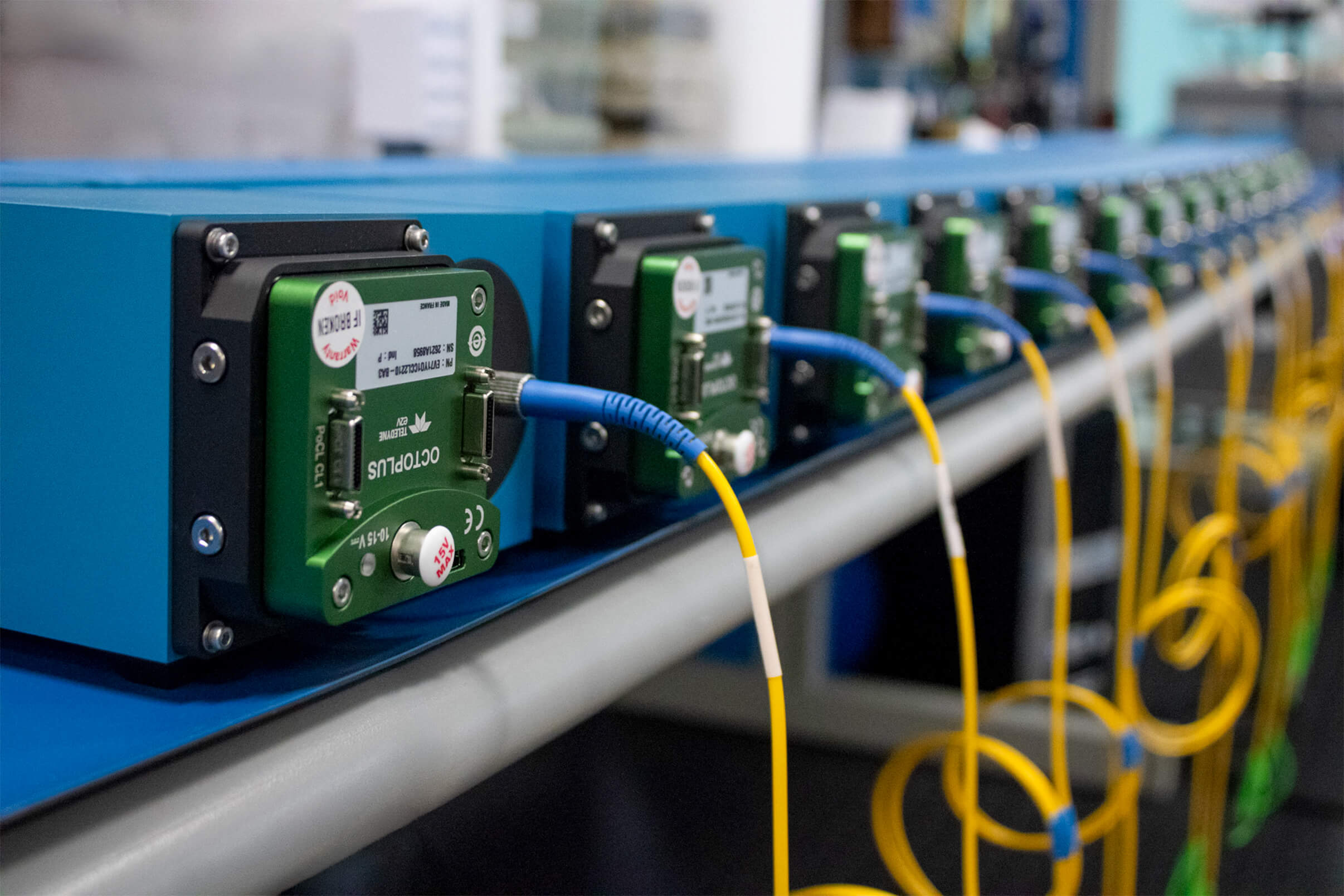
While careful optical design can significantly reduce roll-off in an OCT spectrometer, crosstalk between camera pixels can limit the performance that can be achieved. At Wasatch Photonics, we use high sensitivity, low crosstalk cameras such as the e2v OctoPlus camera in our Cobra-S spectrometers
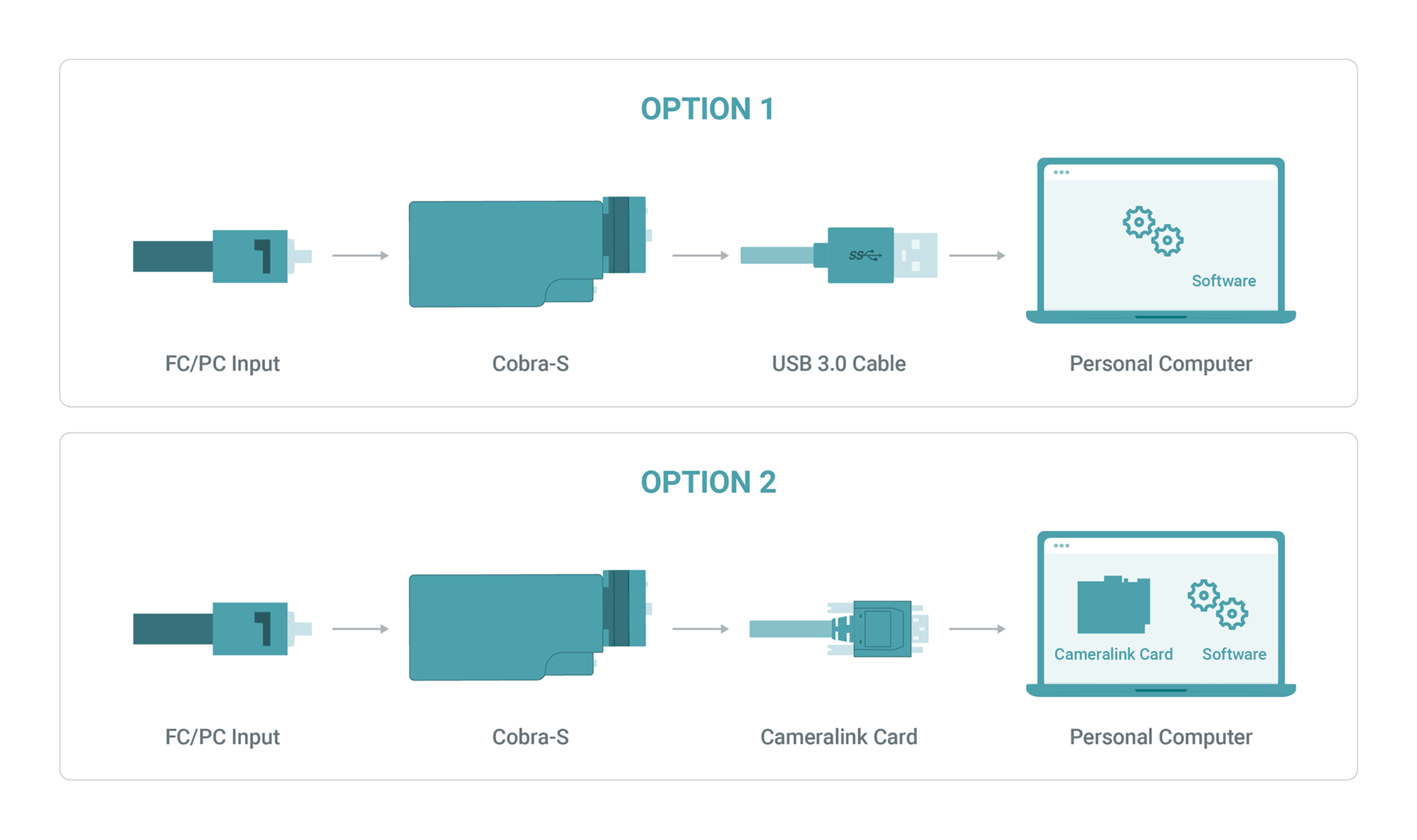
Data transfer from the camera used to collect OCT spectra may be achieved through a camera link card or over USB cable, depending on the camera model. Camera link communication allows for faster scan speeds and are a more stable platform, but it requires purchase of a camera link card and a computer in which to install it. USB 3.0 communication, on other hand, allows any computer to be used for scanning, but only up to 130 kHz; it also requires camera-dependent software development. At Wasatch Photonics, we offer both options to give you the flexibility you need.
The cameras used in OCT spectrometers have many other uses, and come with extensive, complex manuals of commands for control and data acquisition that can be time-consuming to sift through. That’s why Wasatch Photonics OCT spectrometers come with software development kits – a set of streamlined, OCT-specific commands and sample GUIs that allow you to begin acquiring images in just 30 minutes with any OCT spectrometer we offer, saving days to weeks of software development time with guaranteed results.
Over the past decade, we have worked with a wide range of OCT applications and systems, building the expertise to help you identify the optimal system design for your specific needs. We help you to determine when to use standard products and when a custom solution will best accelerate your timeline and elevate performance.
Our team has extensive experience evaluating the many light sources, probes, and peripherals available on the market to help maximize system performance. Combined with our cross-disciplinary application knowledge and hands-on testing, this perspective allows us to solve new challenges with practical and innovative solutions.
Accelerate your SD-OCT product’s time to market with Wasatch. With the industry’s broadest portfolio of commercially available OCT spectrometers and over 20 years of expertise, we’re the trusted partner for OCT instrument development.
Our pre-configured OCT spectrometers allow you to quickly test your ideas while defining the exact requirements for your final system. We work directly alongside our OEM partners through the design and prototype stages, keeping you in full control of development while saving your team valuable engineering hours. Let our experience and field-tested designs help speed up your next system build.
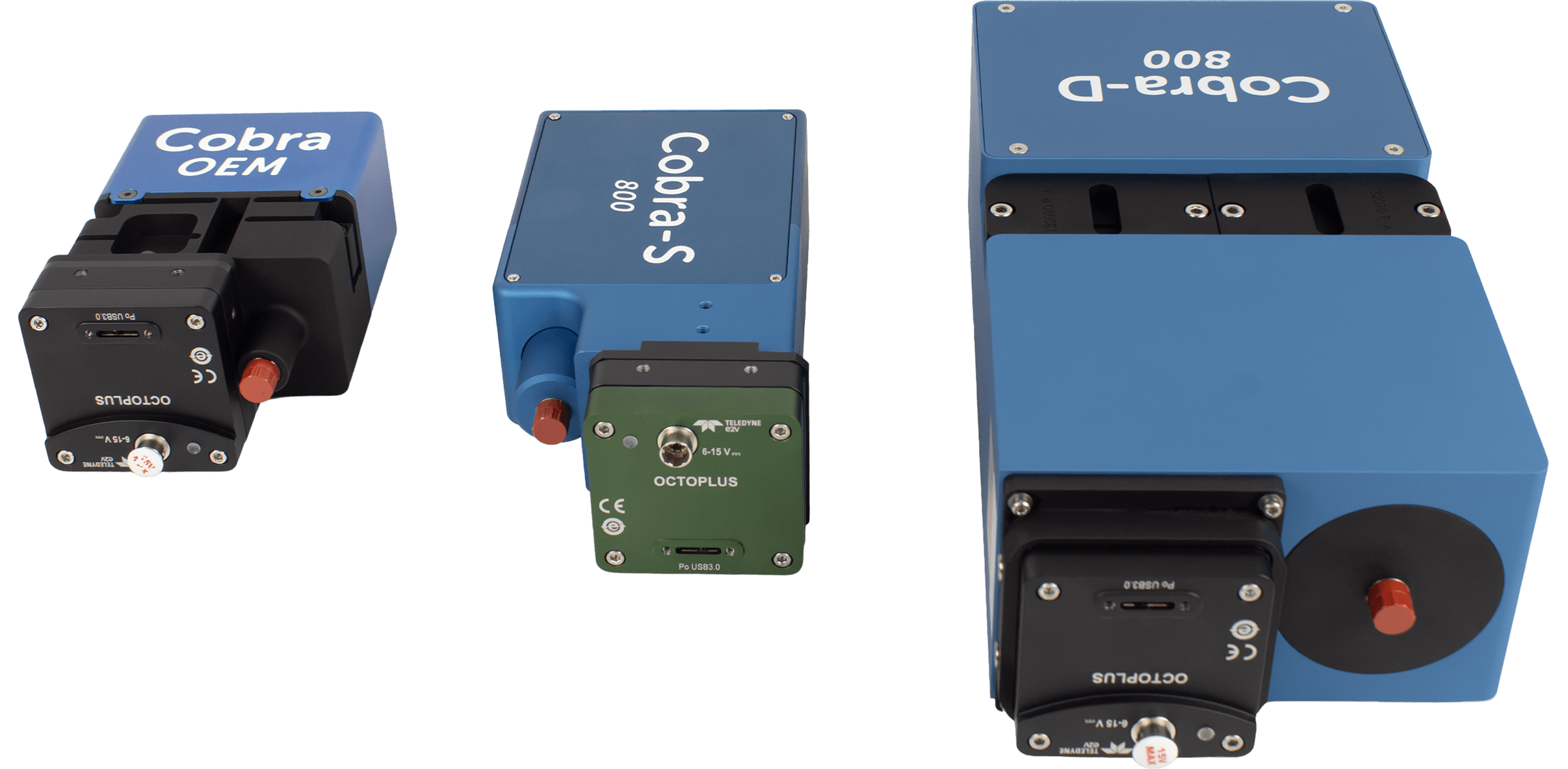
Wasatch offers nearly 30 off-the-shelf, preconfigured spectral-domain OCT spectrometers, with central wavelength and bandwidth options that support a broad range of axial resolutions and imaging depths.
Each Cobra series spectrometer is built on the same core performance criteria.
Misty Johnson is responsible for taking care of our grating customers at the Logan, Utah, facility. She has been a member of the Wasatch Photonics team since 2009. By understanding her customers’ needs and goals, as well as the current grating market, Misty is able to provide a superior level of customer support. As Account Manager, she acts as a liaison between customers and Wasatch Photonics’ manufacturing department making sure that the lines of communication are always open.
Customer support is an integral part of Wasatch Photonics commitment to customers. Whether you are in the market to purchase a single grating, inquiring as a distributor, or purchasing large volume, Misty will guide you seamlessly through the custom design process. Misty strives to build trust and strong long term relationships with Wasatch Photonics customers. She brings 20 years’ experience as customer support manager from a number of manufacturing and service companies.