For 25 years, Wasatch Photonics has engineered and manufactured patented VPH gratings in-house with a focus on precision, scalability, and long-term reliability. Our ISO-certified development and manufacturing process is designed to ensure every grating is manufacturable at scale while maintaining exceptional quality.
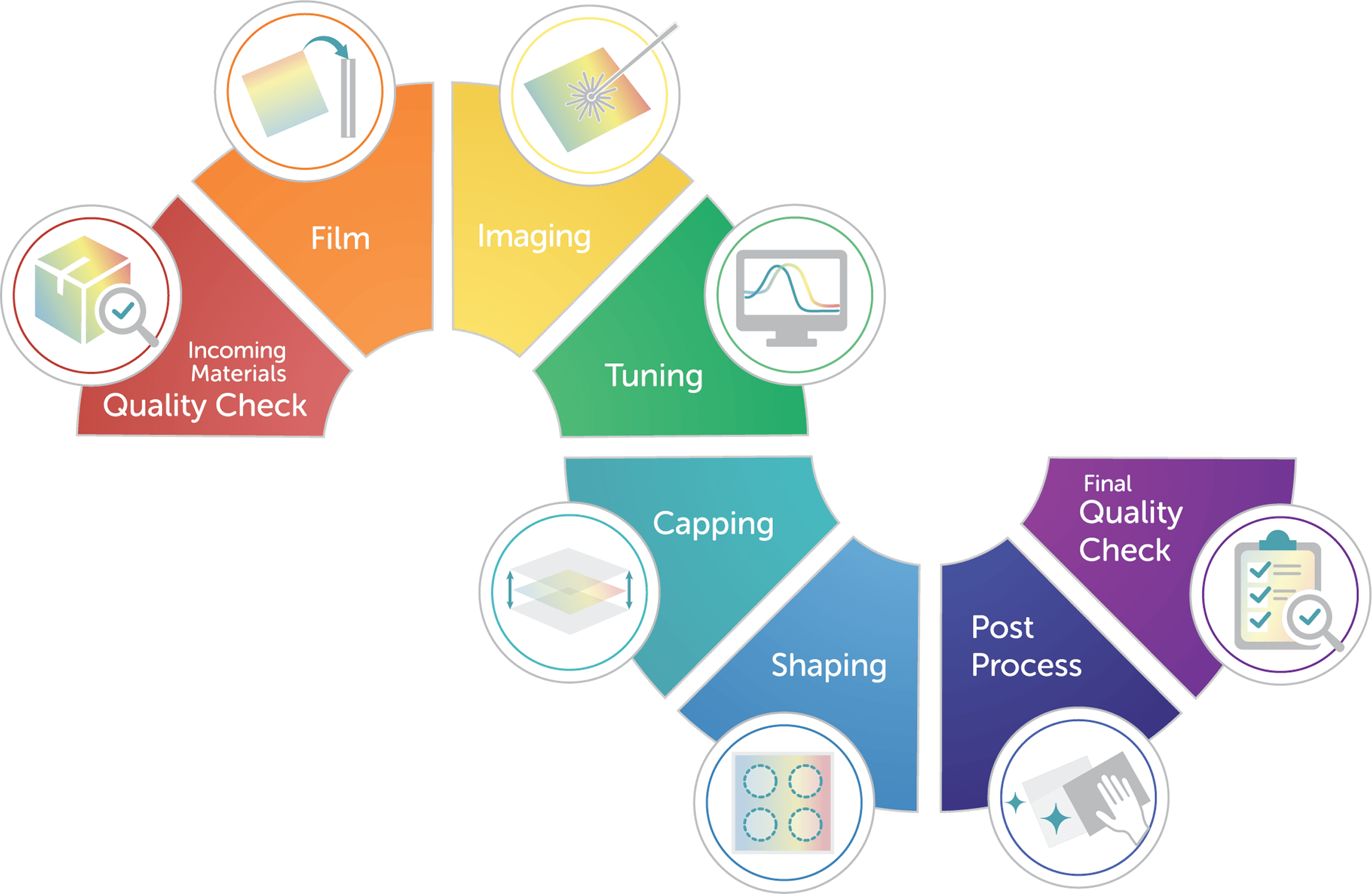
Each grating moves through a carefully controlled multi-step process, with dedicated quality checks throughout. Unlike replicated grating technologies, our VPH gratings are manufactured without replication, helping preserve consistent optical performance and long-term stability.
The Wasatch Photonics dedication to quality in every step is foundational to supporting each customer in their efforts to make meaningful impact on the world around them.
Configuration Considerations
Incoming Materials Quality Check
Every grating begins with careful inspection of the raw materials. Glass substrates are checked for surface defects, while gelatin is evaluated for grade and consistency to ensure the foundation for high optical performance.
Film
A photosensitive gelatin solution is mixed, filtered, and placed in a vacuum chamber to remove air bubbles before being applied to the glass substrate. The substrate is thenspun to create a smooth, uniform film, before being incubated to cure.
Imaging
During imaging, laser interference patterns are recorded in the gelatin to form the grating structure itself. This holographic exposure defines the microscopic periodic pattern responsible for dispersing light with precision.
Tuning
The tuning process modifies the index modulation and bulk index of the grating to achieve the desired optical performance. These changes influence wavelength-specific diffraction efficiency, peak wavelength, and bandwidth.
Capping
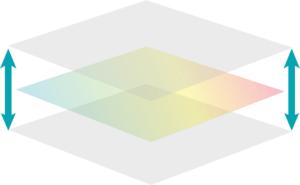
A second glass substrate is bonded to the grating to seal and protect the holographic structure. This improves environmental stability and enhances long-term durability in demanding operating conditions.
Shapping
Once sealed, larger glass sheets containing multiple gratings are cut into individual components using precision saws or industrial water-jet cutting. This allows each grating to be produced in its required final dimensions.
Post-Process
Each grating undergoes final finishing steps, including cleaning, polishing, and anti-reflective (AR) coating. These processes help maximize optical throughput and prepare the grating for integration into finished systems.
Final Quality Check
Before shipment, every grating undergoes final inspection and performance testing to verify it meets quality and optical specifications. This final verification helps ensure consistent, reliable performance in the field.
Misty Johnson is responsible for taking care of our grating customers at the Logan, Utah, facility. She has been a member of the Wasatch Photonics team since 2009. By understanding her customers’ needs and goals, as well as the current grating market, Misty is able to provide a superior level of customer support. As Account Manager, she acts as a liaison between customers and Wasatch Photonics’ manufacturing department making sure that the lines of communication are always open.
Customer support is an integral part of Wasatch Photonics commitment to customers. Whether you are in the market to purchase a single grating, inquiring as a distributor, or purchasing large volume, Misty will guide you seamlessly through the custom design process. Misty strives to build trust and strong long term relationships with Wasatch Photonics customers. She brings 20 years’ experience as customer support manager from a number of manufacturing and service companies.