More signal, faster measurements, lower detection limits
Raman scattering is a weak signal. Wasatch Photonics achieves exceptional Raman sensitivity through system-level optical optimization. A Wasatch Photonics Raman system is designed, from the sample objective lens to the detector, for highest efficiency, generating and collecting as many photons as possible from the sample, and losing as few as possible on their way to being turned into an electronic signal.
Features & Benefits
•
Fast measurements through exceptional sensitivity
•
Fully optimized Raman system design from probe to detector
•
Lower detection limits even for weak Raman emitters
•
Reduced laser exposure for delicate samples
A highly sensitive Raman system enabling fast measurements at low concentrations with reduced sample exposure.
System-Level Optimization
Engineered optics, gratings, and probes for high Raman sensitivity.
Low f/number Design
The f/# quantifies the light-gathering ability of an optical system and captures how efficiently a spectrometer collects light. The f/1.3 optical bench design Wasatch is known for maximizes throughput, making it an excellent choice for Raman applications requiring strong signal and short acquisition times.
High-efficiency Gratings
High-efficiency holographic gratings are used in the low f/# bench design to maximize light collection and throughput. Grating designs are individually optimized for each spectrometer’s range and laser wavelength, to deliver smooth, and exceptionally high, first-order diffraction efficiency with very low polarization sensitivity across the full spectral range.
System Level Optimization
Equally important to the bench itself, the Raman probe is matched to the spectrometer optics and equipped with high-performance filter sets, ensuring efficient signal delivery with strong laser rejection.
Excellent Raman sensitivity.
Excellent Raman sensitivity
This careful design enables rapid measurements and lower detection limits, even for weak Raman emitters.
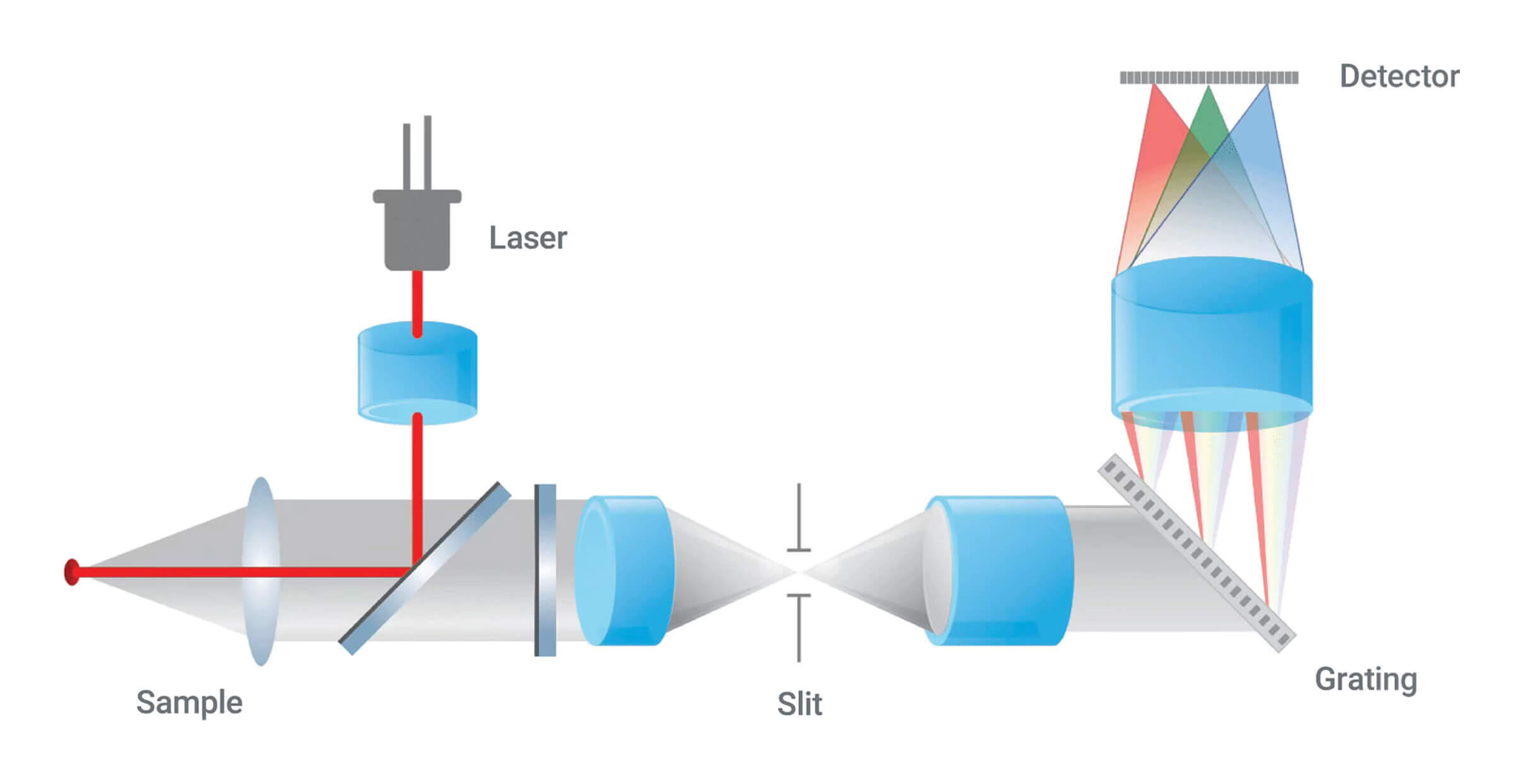
Concept schematic illustration of integrated Raman system with laser and probe, illustrating how all optical components work together as a unified system for optimal performance
Sensitivity Plots
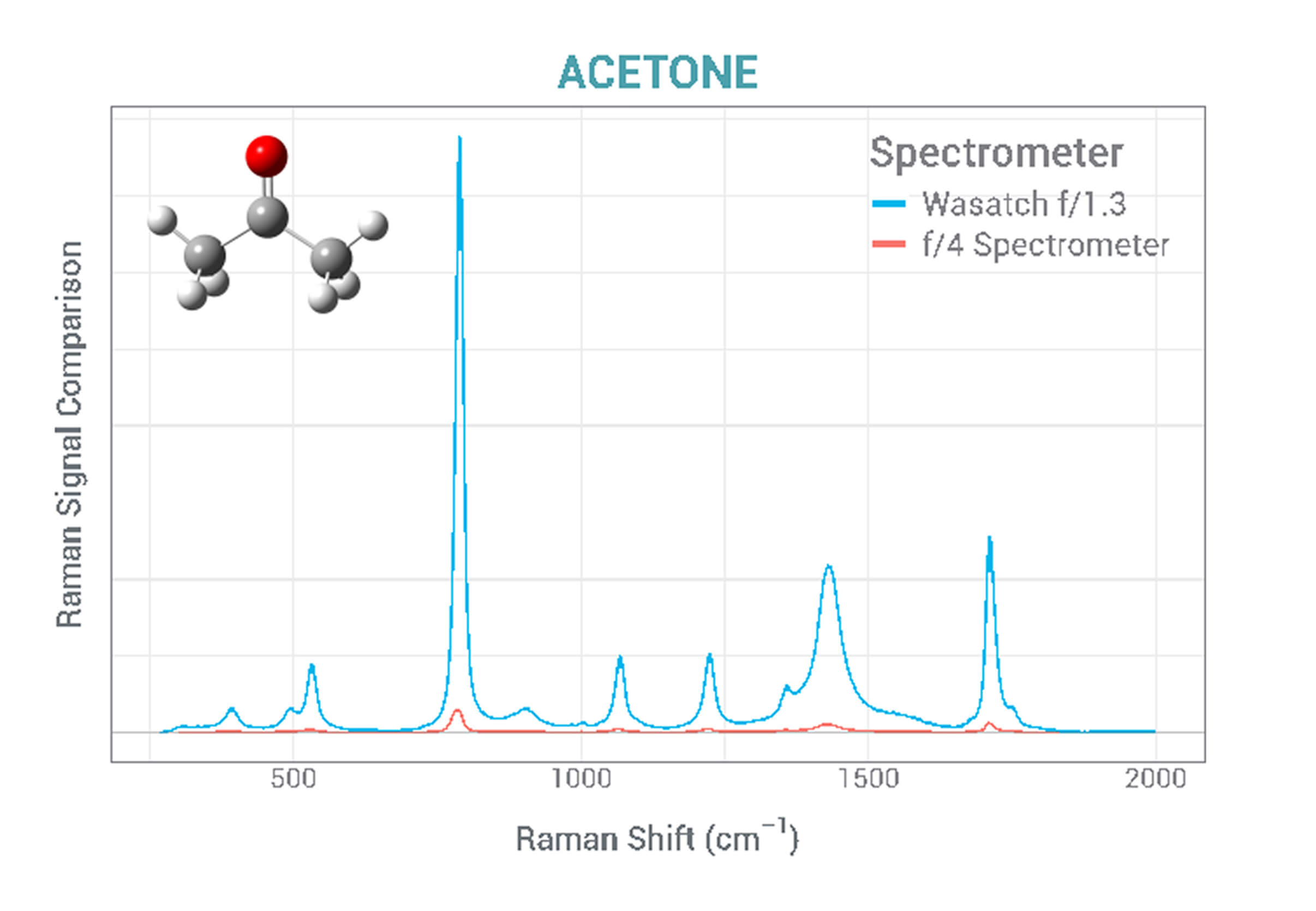
Raman signal comparison for a 400ms integration time between a Wasatch f/1.3 and a competitor f/4 spectrometer
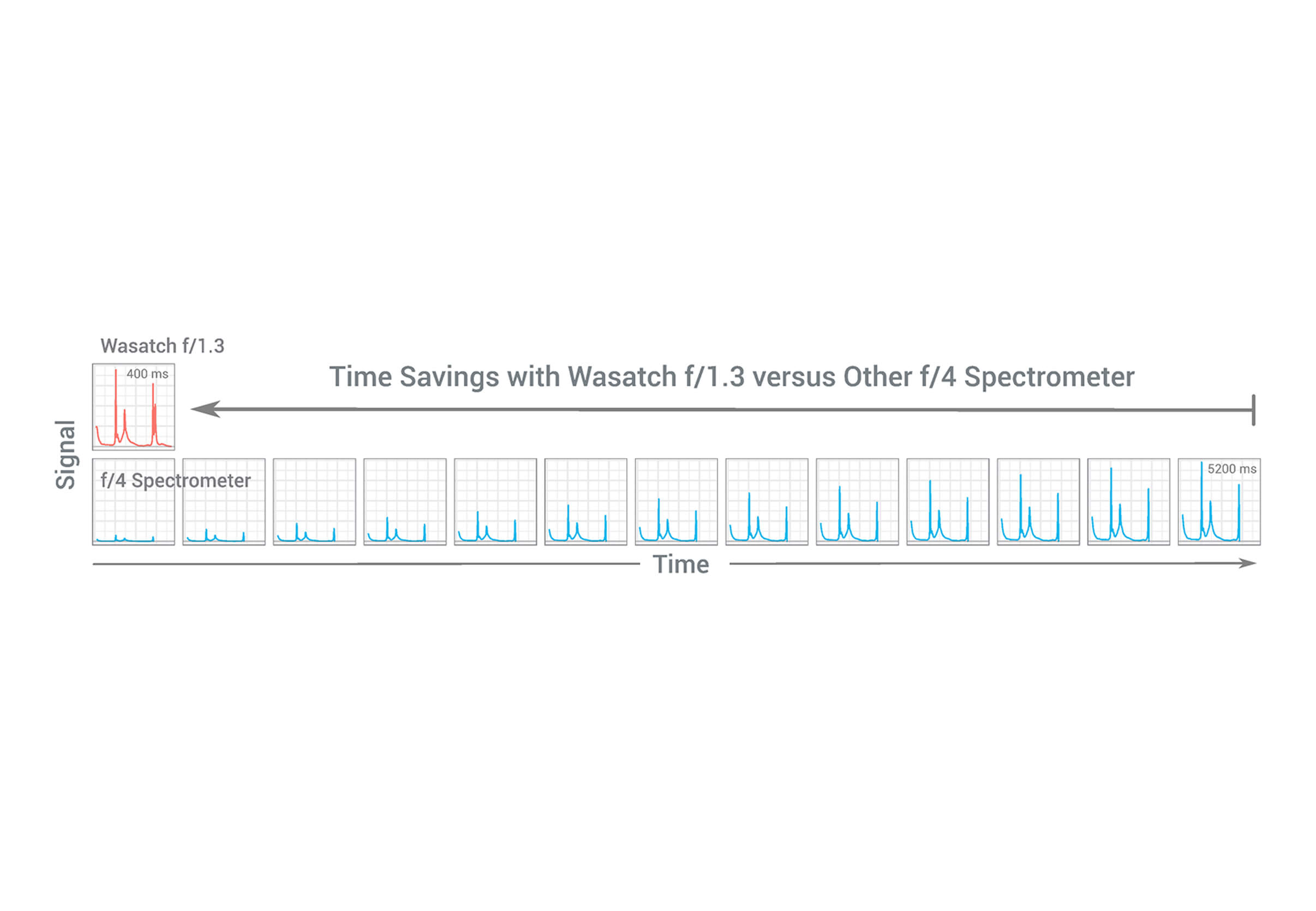
Time savings available when using a Wasatch f/1.3 vs a competitor f/4 spectrometer
Misty Johnson is responsible for taking care of our grating customers at the Logan, Utah, facility. She has been a member of the Wasatch Photonics team since 2009. By understanding her customers’ needs and goals, as well as the current grating market, Misty is able to provide a superior level of customer support. As Account Manager, she acts as a liaison between customers and Wasatch Photonics’ manufacturing department making sure that the lines of communication are always open.
Customer support is an integral part of Wasatch Photonics commitment to customers. Whether you are in the market to purchase a single grating, inquiring as a distributor, or purchasing large volume, Misty will guide you seamlessly through the custom design process. Misty strives to build trust and strong long term relationships with Wasatch Photonics customers. She brings 20 years’ experience as customer support manager from a number of manufacturing and service companies.