Cobra-D 800 Series

Deeper imaging for industrial & medical applications

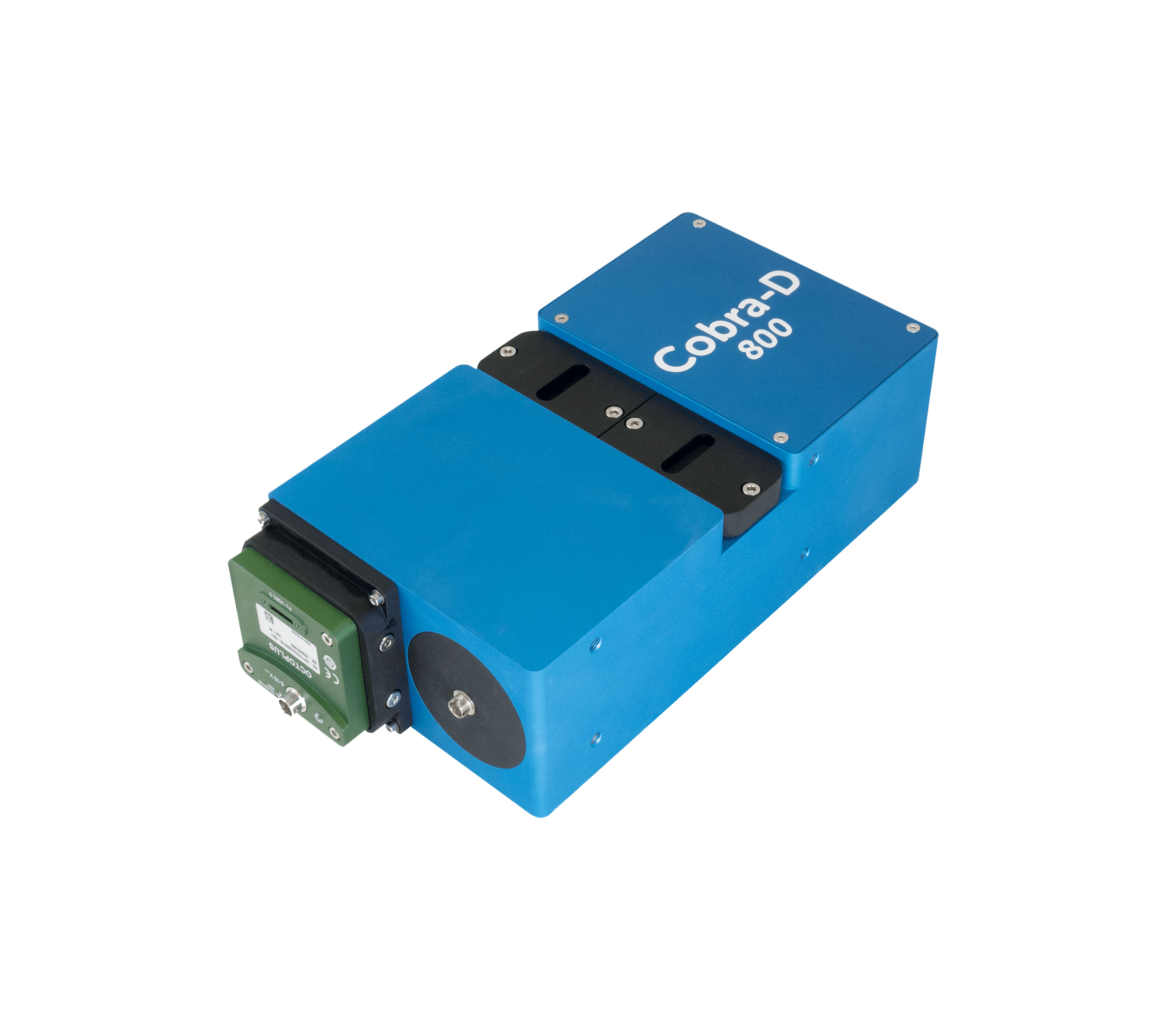
Available in 14mm, 12mm, 9mm, 6mm and 4.5nm models, the Cobra D leverages proprietary optical design based around our IP protected HD gratings to provide industry leading imaging depth capabilities.

OCT imaging traditionally required the use of SWIR wavelengths to probe depths greater than a few millimeters in a single scan, bringing with it the higher cost associated with NIR detectors. That’s why we have developed this optical spectrometer allowing us to achieve imaging depths of up to 14 mm using 800 nm OCT, opening new possibilities for cost-effective measurement of features over a wider range of depths.

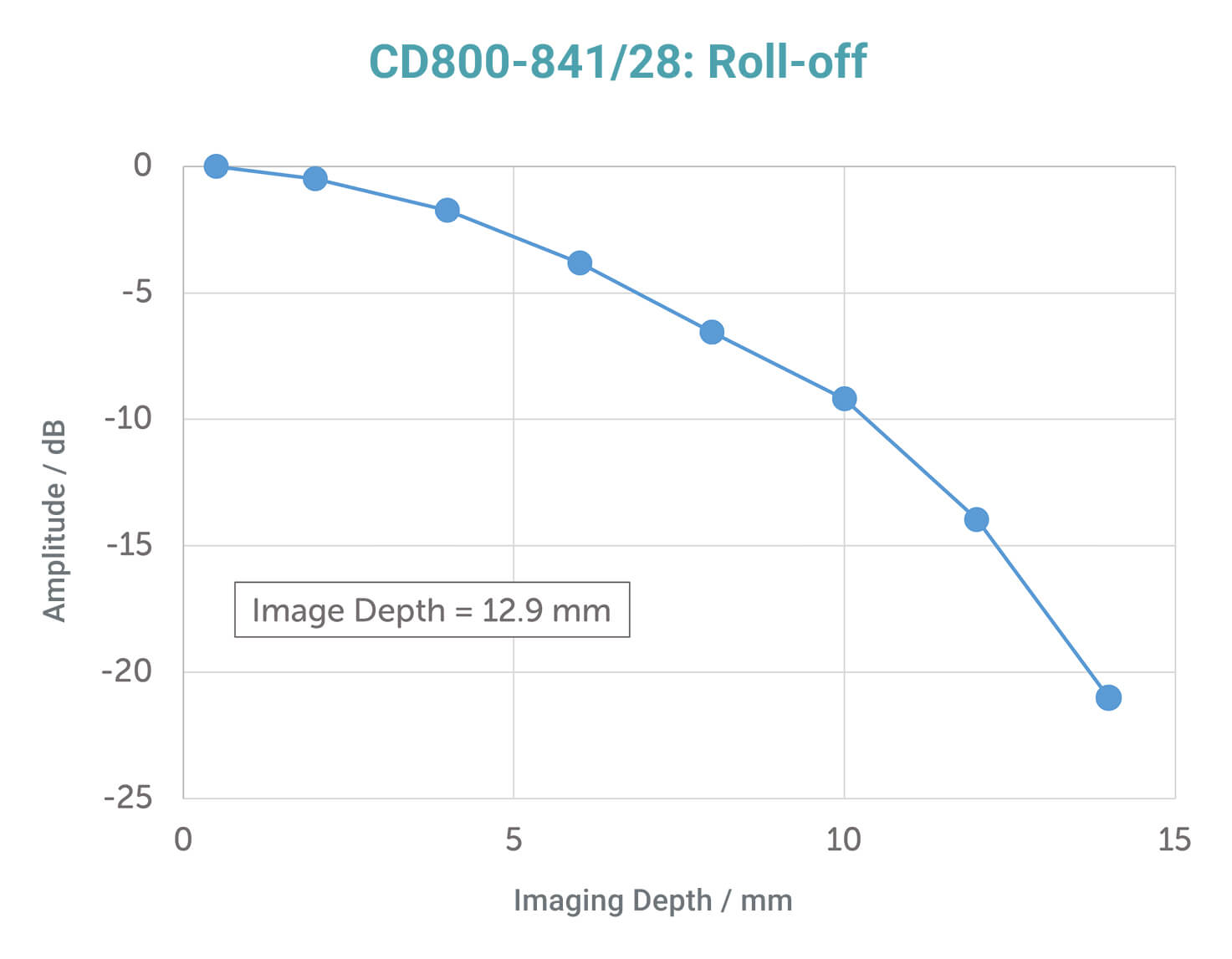
  • Imaging depths up to 14 mm in air at 800 nm with exceptional roll-off performance
  • Greater detection sensitivity using cost-effective CCD cameras vs InGaAs
  • Proprietary ultra-high resolution optical design backed by patent-protected VPH gratings
  •  Industrial-grade mechanical & thermal stability
  • Compact for integration into critical systems
  • Scan rates up to 250 kHz with Camera Link, or 20-130 kHz with USB 3.0 for easier system integration
CD800s-841/21
CD800s-841/28
CD800s-840/40
CD800s-840/60
CD800s-840/80
Wavelength Range
830.5–851.5 nm
827–855 nm
820–860 nm
810–870 nm
800–880 nm
Bandwidth
21 nm
28 nm
40 nm
60 nm
80 nm
Imaging Depth
14.0 mm
12.0 mm
9.0 mm
6.0 mm
4.5 mm
Spectral Resolution
0.01 nm
0.01 nm
0.02 nm
0.03 nm
0.04 nm
Axial Resolution
14.8 µm
11.1 µm
7.8 µm
5.2 µm
3.9 µm
Max Line Rate
20 kHz, 80 kHz, 130 kHz, or 250 kHz
Pixels
2048
Interface
USB 3.0 (up to 130 kHz) or Camera Link (up to 250 kHz)
Dimensions
27.8 cm x 13.4 cm x 7.9 cm
Weight
5.5 kg
Cobra Depth series part numbers are of the format CD800-[CWL]/[BW]-[kHz]-[camera][pixels]-[interface], where the e2v OctoPlus camera is represented by “OC”, 2K denotes 2048 pixels, and the interface is either camera link (up to 250 kHz, denoted by “-CL”) or USB 3.0 (up to 130 kHz, , denoted by “-U3”). Imaging depth stated is the theoretical value, calculated in air.
  • USB-3.0: 20kHz, 80kHz, 130kHz
  • Camera Link: 250kHz

Our new Cobra-D series 800 nm OCT spectrometers have been designed to minimize roll-off with diffraction-limited optics and a low-crosstalk detector, ensuring high clarity images even at extended depths.

  • Material processing applications Surface morphology provides valuable information as materials are deposited, machined, or modified. Both the resolution and the depth range of information of the imaging system used are important, as they determine what answers can be extracted. The ability to image deeper also facilitates wide-field imaging, as the full profile and structure of curved or irregular surfaces can be captured in a single scan. This is especially important in laser machining and welding, where a particular cut or hole may run deep, and for profiling complex surfaces in additive manufacturing.

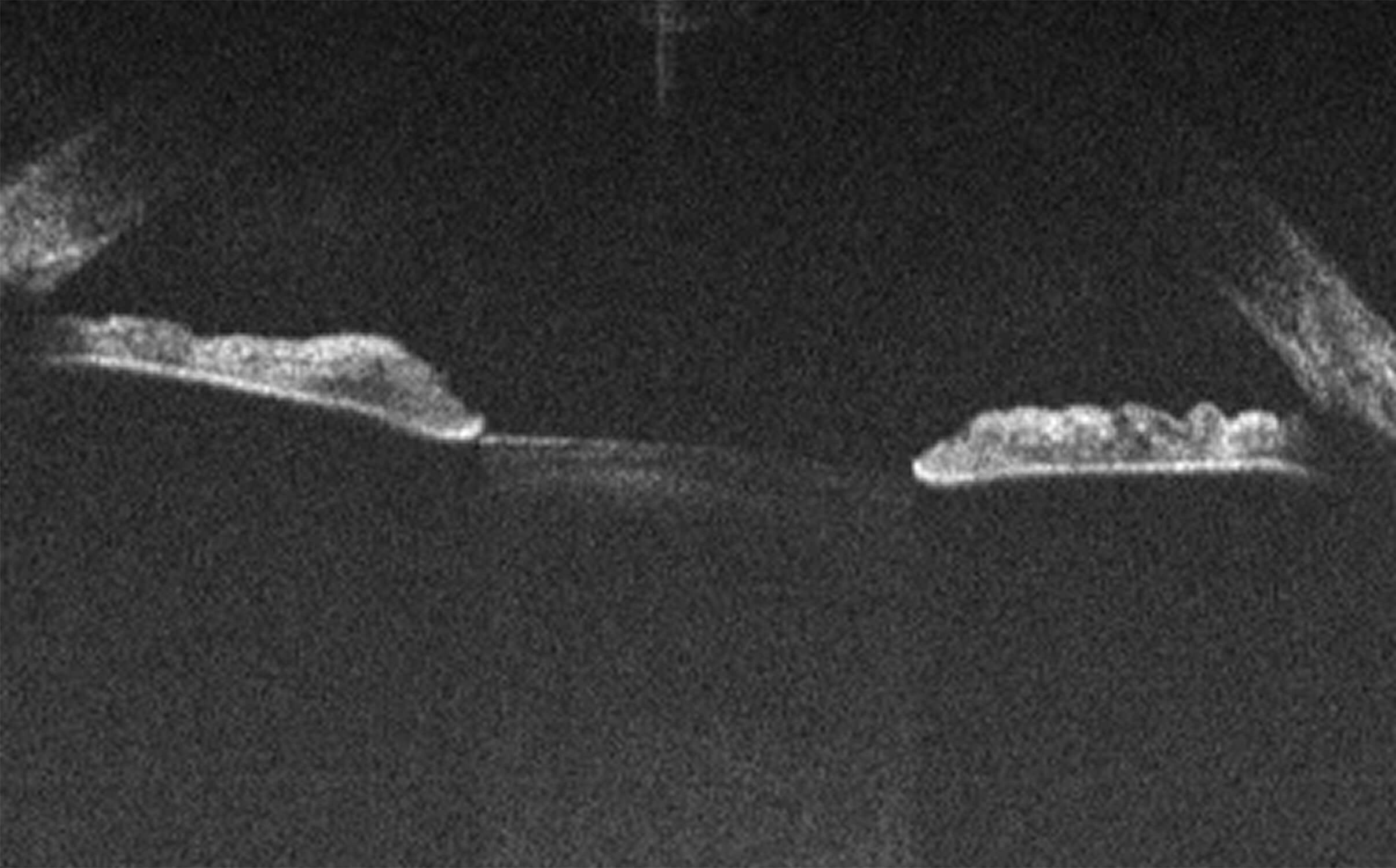
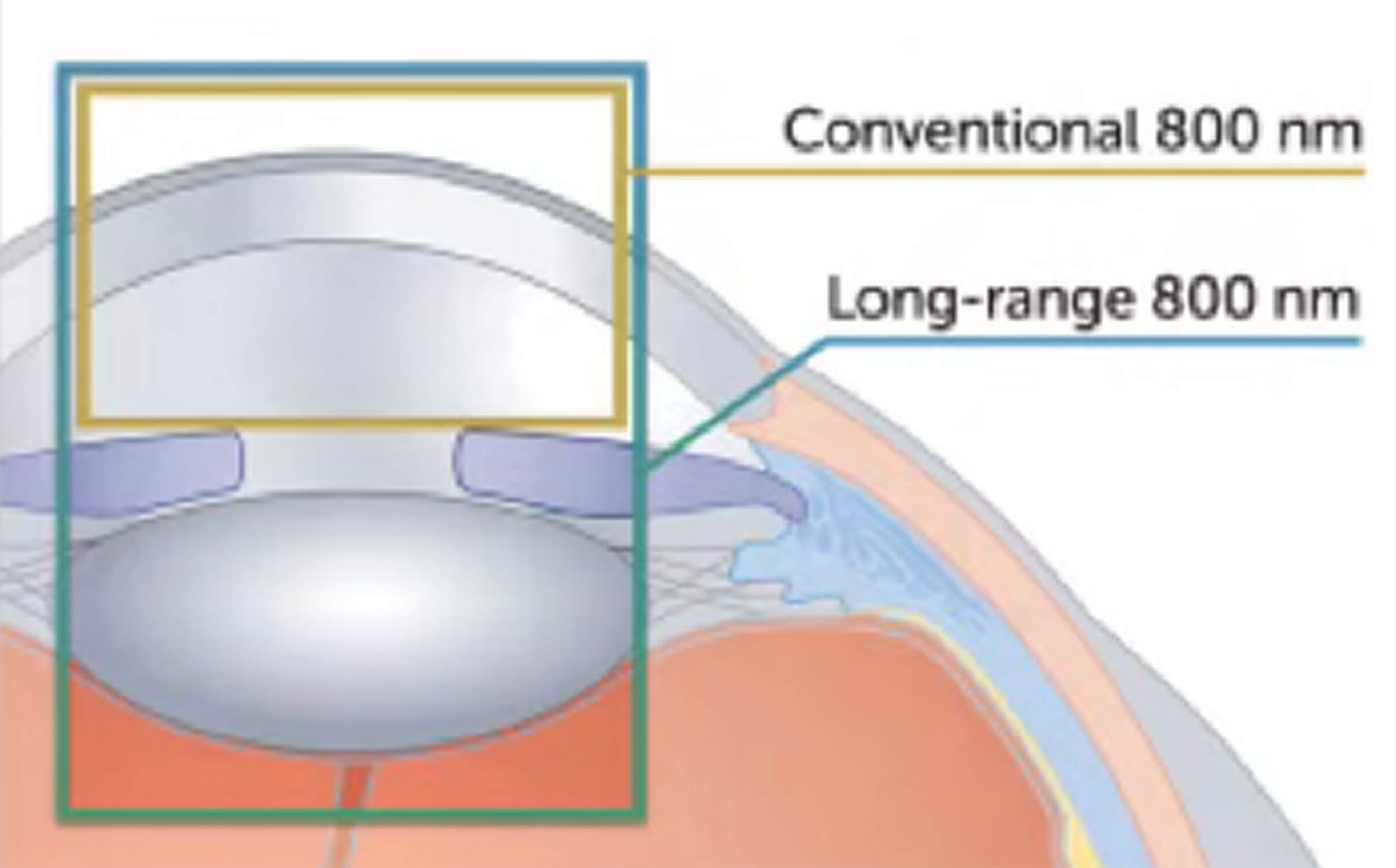
  • Ophthalmology Long-range imaging is beneficial for examination of the full anterior chamber, from cornea to crystalline lens, as it permits a more complete image of the eye to be acquired in less time for assessment of eye health. It can even be used to image the whole eye if configured appropriately. It also facilitates wide-field imaging of the retina, the curvature of which requires a greater range of imaging depth, particularly in clinical settings where the patient is unlikely to remain static.
  • Medicine Long-range OCT can be of great benefit for lumen imaging in intravascular and gastrointestinal applications. In such scenarios the structures of interest may be more than a few millimeters from the imaging catheter and therefore fall outside the typical OCT imaging window. A long imaging depth can account for such variability in distance between the imaging probe and area of interest, facilitating better imaging outcomes.

Compatible with Wasatch Photonics’ SDKs for rapid data access in development environments (e.g., C++, LabVIEW, MATLAB).

Image of the eye, anterior chamber, and lens taken with the Cobra Depth model CD800-841/28