

Lorem ipsum dolor sit amet, consectetur adipiscing elit. Integer tincidunt porta risus, venenatis bibendum turpis rhoncus a. Maecenas hendrerit libero vel orci egestas, a eleifend nulla euismod.
The minimum integration time for the Cobra-S spectrometer is 1.3 μs. The maximum integration time is 655.35 μs.
Detailed instructions, a summary of data flow, and camera link commands can be found on our guide, Cobra Spectrometers: Getting started.
Cobra spectrometers in the 800nm passband would include a FC/APC to FC/PC patch cable with a Nufern 780HP fiber type. (0.13NA, ~5um mode field diameter e.g. Thorlabs P5-780A-PCAPC-1).
Spectrometers using 300nm excitation would typically use a 630HP or SM600 fiber type (0.13NA, ~4um mode field diameter e.g. P5-630A-PCAPC-1).
VIS units would include a 405 or 460 fiber depending on the spectral range:
CS550-475/15SM300, 0.13NA, ~2um MFD e.g. P5-405B-PCAPC-1CS550-555/80, CS550-573/115, CS550-600/200SM400, 0.13NA, ~3um MFD e.g. P5-460B-PCAPC-1
NIR units use SM980-5.8-125, 0.13NA, ~5.8MFD e.g. P5-980A-PCAPC-1. Other acceptable fiber types in this passband include 980HP and SMF28.
The goal with the fiber size is to keep the core small enough to ensure single-mode operation across the wavelength range of the spectrometer. Some of our spectrometer spectral ranges exceed the operating wavelength specifications of commonly available fibers, and in those cases it is generally preferred to use a fiber that ensures single mode operation on the low end of the spectrometer’s spectral range.
OCT systems built by Wasatch typically use patch fibers from Thorlabs or Neptec.
The Octoplus CL BA3 (3 is the highest speed class) can support anything from 2Tap 12-bit 80khz up to 8tap 10-bit 250khz. The cameralink geometry is changeable through E2V commcam software, then the frame grabber and software need to be configured to match how the camera is configured. The Octoplus BB series has higher dynamic range (around 200ke-1 vs 140ke-1 well depth).
The fringe file the WPOCT processor toolkit reads in can be generated by a Octave/Matlab script and is unique to each spectrometer based on the wavelength calibration coefficients. It is used to characterize the pixel space into a k-linearized wavenumber space as part of the OCT processing which will help to get more consistent axial resolution at different depths after numerical dispersion compensation. The wavelength is converted to wavenumber and then spline interpolated into a range of 1-2048 pixel values.
c=[
8.10582E+02
3.16944E-02
-1.37746E-06
9.40811E-12
]

n=linspace(0,2047,2048);
n2048=linspace(1,2048,2048);
wl=c(1)+c(2)*n+c(3)*n.*n+c(4)*n.*n.*n;
wn=2*pi./wl;
rwn=linspace(wn(1),wn(2048),2048);
cal=interp1(wn,n2048,rwn,'spline');
cal=transpose(cal);
figure;plot(cal);
save calibration_C-0XXXX_MM-DD-YY.txt cal -ascii;
msgbox("Finished!");
To interface with two cameras on one MX4, the firmware configuration of the MX4 needs to be changed to 2x Base Camera Link in the Device Update Tab of the Teledyne DALSA Device Manager. This utility can be found by searching the windows start menu for Device Manager or Firmware Update.
Do you have more questions about OCT (Optical Coherence Tomography) that aren’t answered here? Get in touch with us!

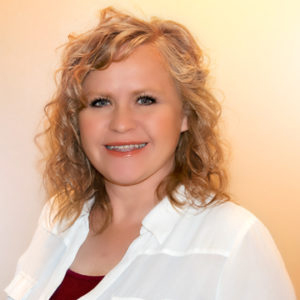
Misty Johnson is responsible for taking care of our grating customers at the Logan, Utah, facility. She has been a member of the Wasatch Photonics team since 2009. By understanding her customers’ needs and goals, as well as the current grating market, Misty is able to provide a superior level of customer support. As Account Manager, she acts as a liaison between customers and Wasatch Photonics’ manufacturing department making sure that the lines of communication are always open.
Customer support is an integral part of Wasatch Photonics commitment to customers. Whether you are in the market to purchase a single grating, inquiring as a distributor, or purchasing large volume, Misty will guide you seamlessly through the custom design process. Misty strives to build trust and strong long term relationships with Wasatch Photonics customers. She brings 20 years’ experience as customer support manager from a number of manufacturing and service companies.